



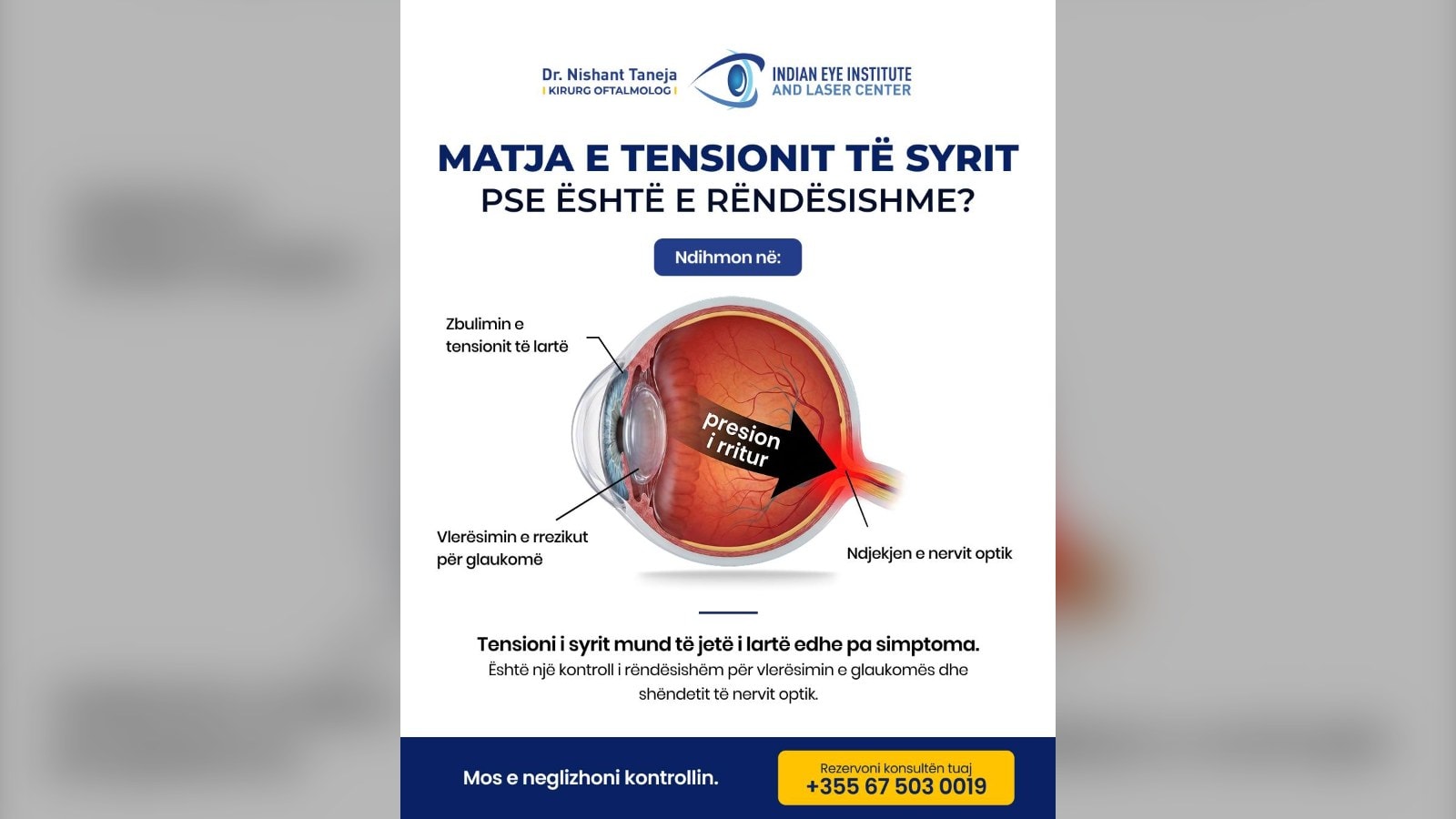
In brief: Eye pressure, also called intraocular pressure, is between 10 and 21 mmHg for most people and varies throughout the day. Pressure above this range does not necessarily mean glaucoma, but it increases the risk. On the other hand, glaucoma can damage the optic nerve even when eye pressure is normal. High eye pressure usually causes no symptoms, so it is detected only by measurement at an eye exam. When it is high, it is usually lowered with eye drops, and in some cases with laser treatment or surgery.
What is eye pressure?
Eye pressure, or intraocular pressure, is the pressure inside the eye. The eye continuously produces a clear fluid that circulates through its front part and drains through a channel. When the amount of fluid produced and drained is in balance, the pressure remains steady. When the fluid does not drain properly, the pressure rises.
Eye pressure is not blood pressure. It is measured in the eye using a different device, and the two readings can be completely different. However, high blood pressure is one of the factors that increase the risk of high eye pressure.
What is normal eye pressure?
According to the American Academy of Ophthalmology (AAO), normal eye pressure is between 10 and 21 mmHg (millimeters of mercury). Pressure above 21 mmHg with a healthy optic nerve is called ocular hypertension: it increases the risk of glaucoma, but it is not glaucoma. Eye pressure changes throughout the day, so a single reading is not enough—we always interpret it alongside the condition of the optic nerve.
| What we find during the exam | What it is called | What happens next |
|---|---|---|
| 10–21 mmHg, healthy optic nerve | normal eye pressure | next checkup based on age and risk |
| Above 21 mmHg, optic nerve and vision unaffected | high eye pressure (ocular hypertension) | repeat measurements, corneal thickness check, decision about monitoring or treatment |
| High pressure and optic nerve damage | glaucoma | treatment to lower eye pressure |
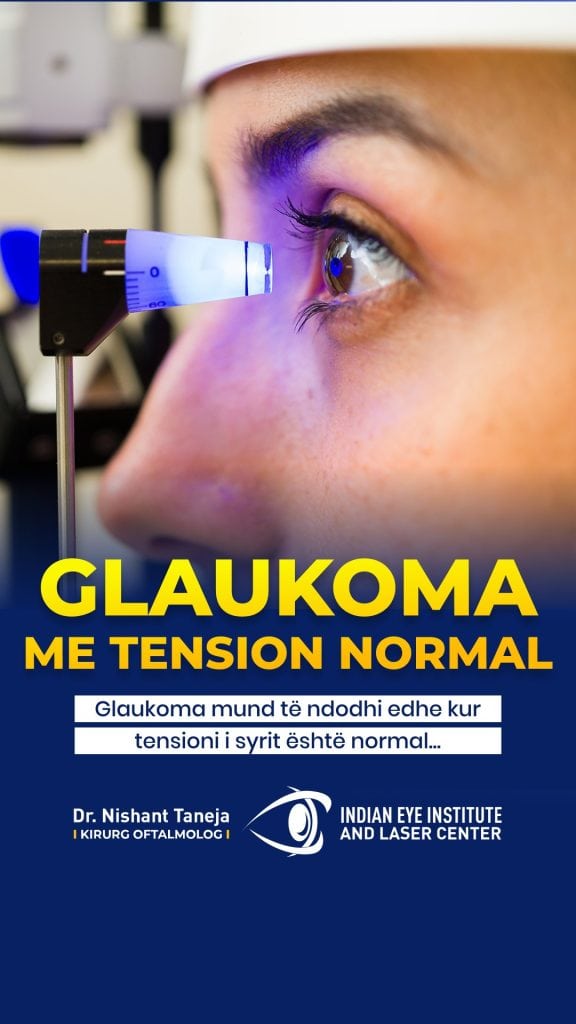
| Normal pressure, but optic nerve damage | normal-tension glaucoma | treatment and regular checkups |
In most cases of glaucoma, the pressure that damages the optic nerve is above 21 mmHg. Some people can tolerate higher pressure without any damage, while in others the nerve is damaged even when pressure is below 21 mmHg.
Causes: what raises eye pressure?
Eye pressure rises when fluid in the eye does not drain properly. The risk of high eye pressure is greater if:
- someone in your family has high eye pressure or glaucoma;
- you are over 40;
- you have diabetes or high blood pressure;
- you have high myopia (a strong minus prescription);
- you use corticosteroid (steroid) medication for a long time;
- you have had an eye injury or eye surgery;
- you have pigment dispersion syndrome or pseudoexfoliation, two conditions we can identify during an examination.
If you use cortisone drops or medication for a long time, let us know so your eye pressure can be checked regularly. Do not stop taking them on your own: steroids should not be stopped without first speaking to the doctor who prescribed them. For more about high myopia and its risks, read Myopia: causes, symptoms, and whether it can be cured.
High eye pressure: does it cause symptoms?
Usually not. High eye pressure does not hurt or affect your vision, so most people do not know they have it. Even the most common type of glaucoma, open-angle glaucoma, has no early warning signs. That is why we measure eye pressure at every comprehensive eye exam.
The exception is an acute attack of angle-closure glaucoma, when eye pressure rises suddenly. This is a true emergency because, without treatment, it can lead to blindness. Go to an ophthalmologist or the emergency room immediately if you have:
- severe pain in your eye or forehead;
- a red eye and blurred vision;
- colored rings around lights;
- a headache, nausea, or vomiting along with eye pain.
Early symptoms may be mild: blurred vision, halos around lights, or a mild headache or eyeache. For other urgent symptoms, see when to see an eye doctor immediately.
How is eye pressure measured?
The measurement takes only a short time. We use a tonometer: after applying drops to numb your eye and keep you comfortable, the device gently touches your cornea or measures pressure with a puff of air. We also perform the following tests to assess your risk:
- Corneal thickness (pachymetry). This helps assess risk: in a large US study on ocular hypertension, a thin cornea was found to be an important risk factor for glaucoma.
- Optic nerve. We examine it after dilating the pupil with drops and perform an OCT scan.
- Visual field. This test shows whether there is any loss of peripheral vision.
- Drainage angle. This distinguishes open-angle glaucoma from closed-angle glaucoma.
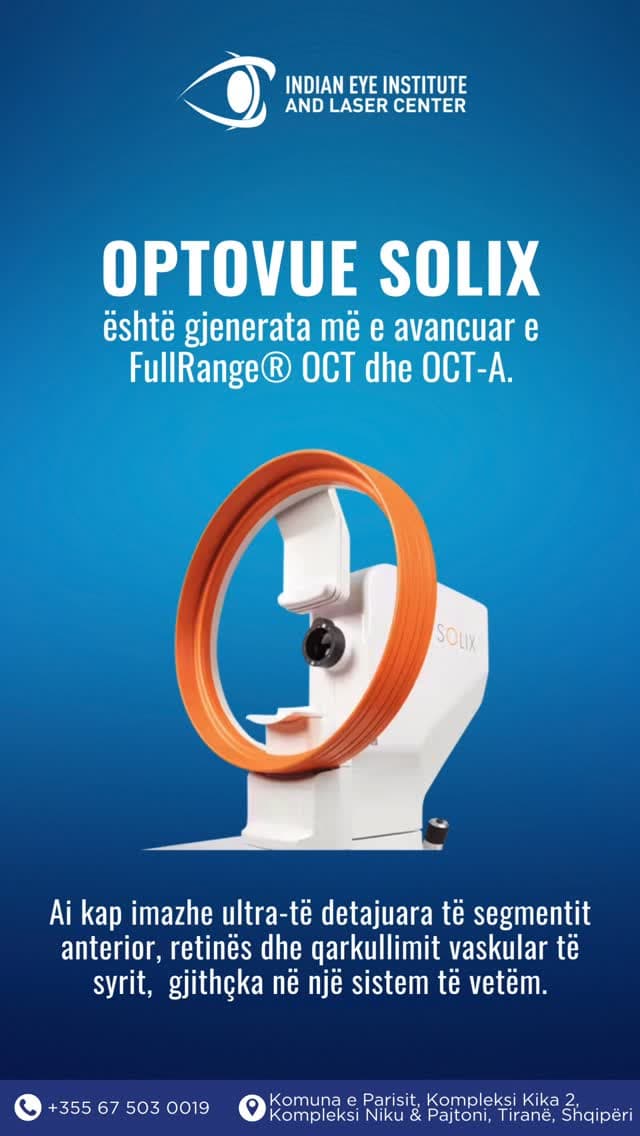
At Indian Eye Institute & Laser Center (the Indian Eye Clinic) in Tirana, Dr. Nishant Taneja diagnoses glaucoma using these examinations, and we scan the optic nerve and retina with the Optovue Solix OCT and OCT-A.
How is high eye pressure lowered, and when is it treated?
High eye pressure is usually lowered with eye drops, and in some cases with laser treatment or surgery. Not every case of high eye pressure needs immediate treatment: the decision depends on each patient’s risk.
When eye pressure is above normal but the optic nerve and vision are unaffected (ocular hypertension), the patient does not have glaucoma but is at greater risk of developing it, so we monitor them closely.
The largest study on this question, the Ocular Hypertension Treatment Study (OHTS) by the US National Eye Institute (NEI), published in 2002, followed 1,636 people aged 40–80 with high eye pressure and no signs of glaucoma. Half used eye drops every day, while the other half were monitored without drops. The drops lowered eye pressure by about 20%. Within 5 years, glaucoma developed in 4.4% of those using drops and 9.5% of those not using drops. In other words, even without drops, 9 in 10 people did not develop glaucoma within 5 years.
When eye pressure is only slightly high, regular checkups may be enough. Otherwise, we usually start with eye drops, with the first follow-up after a few weeks. Treatment reduces the risk but does not eliminate it completely, so regular checkups continue.
Brisk walking and regular moderate-intensity exercise may lower eye pressure in some people, while very strenuous exercise may raise it. No herbal remedy has been proven effective, and none can replace prescribed eye drops.
When the diagnosis is glaucoma, we treat it with eye drops, laser (SLT or iridotomy), or surgery. We explain how each option is chosen in our guide to glaucoma treatment.
From Dr. Nishant Taneja’s experience: Many people with high eye pressure have no symptoms and come in only for glasses. We detect high pressure during an eye exam, which is why we measure it at every comprehensive eye exam.
How often should eye pressure be measured?
Eye pressure is measured at every comprehensive eye exam. We recommend that adults without symptoms have a baseline exam at around age 40; after that, we’ll advise how often to return. People with a family history of glaucoma, diabetes, high myopia, or ocular hypertension should have more frequent checkups. Find the recommended schedule by age in our guide to how often you should have an eye test.
People with ocular hypertension or glaucoma need regular checkups, even when their eye pressure is under control. At each visit, we compare eye pressure, the optic nerve, and the visual field.
Frequently asked questions
Does measuring eye pressure hurt?
Usually not. Before a contact measurement, we numb the eye with drops to keep you comfortable. The air-puff measurement takes just a moment.
I have high eye pressure. Will I lose my vision?
Not necessarily. In the OHTS study, 9 in 10 people with high eye pressure who did not use drops did not develop glaucoma during the 5-year study. However, their risk is higher than that of other people, so regular checkups and treatment when needed help protect the optic nerve.
Can I have glaucoma with normal eye pressure?
Yes. With normal-tension glaucoma, the optic nerve is damaged even though eye pressure remains within the normal range. That is why, during an exam, we always check the optic nerve and visual field, not just eye pressure.
Sources
- American Academy of Ophthalmology — What Is Ocular Hypertension?
- American Academy of Ophthalmology — What is eye pressure?
- American Academy of Ophthalmology — What Is Glaucoma? · Glaucoma Symptoms
- American Academy of Ophthalmology — Easy Steps to Prevent Vision Loss From Glaucoma
- American Academy of Ophthalmology — Home remedies to lower eye pressure
- American Academy of Ophthalmology — Eye Exam and Vision Testing Basics
- National Eye Institute — Eye Drops Delay Onset of Glaucoma in People at Higher Risk (OHTS)
- NHS — Steroids
Has it been a while since your eye pressure was checked? Book a comprehensive eye exam at Indian Eye Institute & Laser Center in Tirana: eye pressure, optic nerve, and visual field checked in one visit. Book your appointment · Tel. +355 67 50 30 017