


In brief: You need a pediatric eye doctor if your child does not pass a vision screening or is referred by their pediatrician. Bring them in if their eyes do not appear straight, they tilt their head or move very close to see, or there is a family history of strabismus, lazy eye, or childhood eye disease. Even without symptoms, the American Academy of Ophthalmology (AAO) recommends that children’s eyes be checked at birth, at 6–12 months, at 1–3 years, at 3–5 years, and at school age. Children do not need to know how to read. Refractive errors, strabismus, and lazy eye are best treated when detected early.
Children’s eye screening or an eye doctor’s exam?
Many children have a brief vision screening at the pediatrician’s office or at school. This screening identifies children who need further evaluation. A comprehensive eye exam by an eye doctor establishes the diagnosis: vision is measured accurately, eye drops are used to dilate the pupils, and the retina and optic nerve are examined.
A pediatric eye doctor is also called a pediatric ophthalmologist; we explain the difference between the terms in eye doctor or ophthalmologist. You can find the full schedule of eye exams, including what is checked at each age, in how often you should have an eye exam.
When does your child need an eye doctor?
Your child needs a comprehensive eye exam if they:
- do not pass a vision screening, or the screening cannot be completed or is inconclusive;
- are referred by their pediatrician or school nurse;
- complain about their vision or behave unusually when looking at things;
- were born prematurely, have Down syndrome, or have juvenile idiopathic arthritis;
- have a family history of lazy eye, strabismus, retinoblastoma, cataracts, or glaucoma in childhood;
- have learning difficulties, developmental delays, or behavioral problems.
Signs you may notice at home
- one eye turns inward, outward, up, or down, all the time or when your child is tired;
- the eyes move on their own from side to side or up and down, and your child cannot control them;
- they tilt or turn their head to see;
- they close or cover one eye, especially in bright light;
- they sit very close to the TV, hold a book very close, or lose their place while reading;
- they rub their eyes often or blink a lot;
- they complain of headaches or tired eyes;
- they are clumsy or have difficulty catching a ball.
Do not wait if one pupil looks white instead of red in a flash photo or in dim light. Often, this is simply because of where your child was looking in the photo, but a white reflex can also be a sign of cataracts or, very rarely, an eye tumor (retinoblastoma). This requires an urgent appointment. Bring the photo with you.
Lazy eye often causes no symptoms and is first detected during an exam. That is why eye exams matter even when your child seems to see well.
What happens during a pediatric eye exam?
Your child does not need to know how to read—or even speak—to have their eyes checked. At our clinic, we tailor the tests to their age:
| Age | How vision is measured |
|---|---|
| Babies | picture and pattern cards; we see which ones catch the baby’s attention |
| Babies, young children and children with special needs | The Plusoptix pediatric autorefractor measures the glasses prescription from about one meter away while the child looks at the camera for less than a second |
| 3–5 years | LEA symbols (simple pictures), at near and far distances |
| Over 6 years old | An eye chart with letters or symbols, as for adults |
We measure vision separately in each eye. We also check how the eyes move and work together, and how they perceive depth.
Children’s eyes can change focus very easily, which can hide their true glasses prescription. That’s why we use eye drops to dilate the pupils and relax the focusing muscles temporarily. After the drops, vision may remain blurry for several hours, sometimes up to a day. With the pupils dilated, we also examine the retina and optic nerve.
How to prepare your child: bring their glasses, photos in which one eye looks different, and a list of eye conditions in the family. Let us know if your child was born prematurely. Explain that the eye drops may sting a little for a few seconds, and schedule the visit for a day when your child has no school or homework afterward.
Children’s glasses prescriptions: myopia, hyperopia and astigmatism
A child’s glasses prescription is measured accurately after drops that relax the focusing muscles. A diopter (D) is the unit used to write a glasses prescription. Most children aged 3–5 don’t need glasses. At school age, the most common problem is myopia, which makes it difficult to see things far away and is corrected with glasses.
With hyperopia, nearby objects look blurry; severe hyperopia in children can increase the risk of strabismus or lazy eye. With astigmatism, vision is blurry or distorted because the cornea or lens is not shaped properly.
An uncorrected glasses prescription is more than just a concern at school: uncorrected myopia in young children may be associated with strabismus or lazy eye. We explain why myopia is increasing in children, how much time outdoors and in front of screens we recommend, and how to slow it down in myopia in children.
Lazy eye (amblyopia) and strabismus
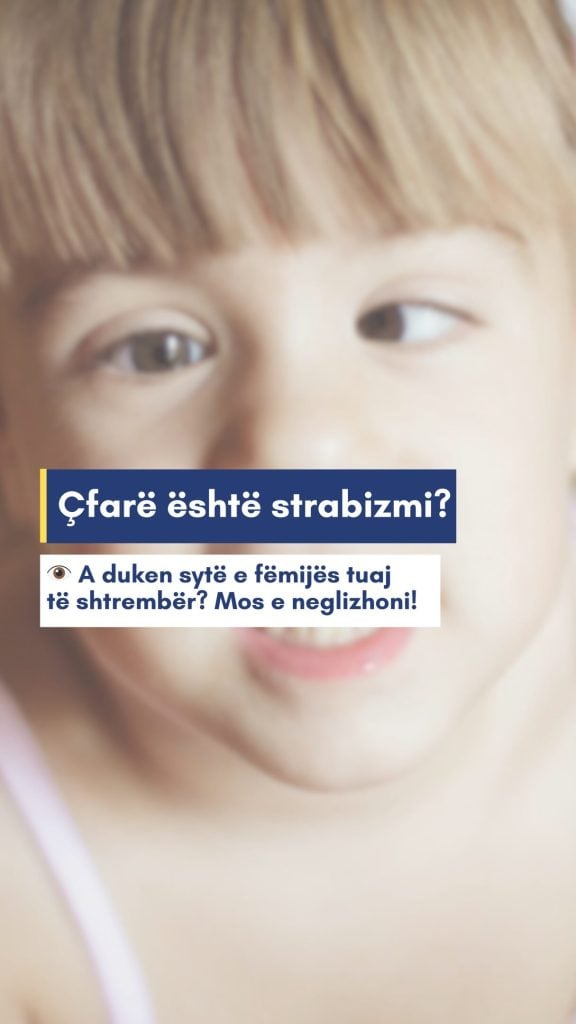
With strabismus, one eye does not look at the same object as the other, which can also lead to lazy eye. Find out about the signs, examination, and treatment with glasses, patching, or surgery in strabismus in children.
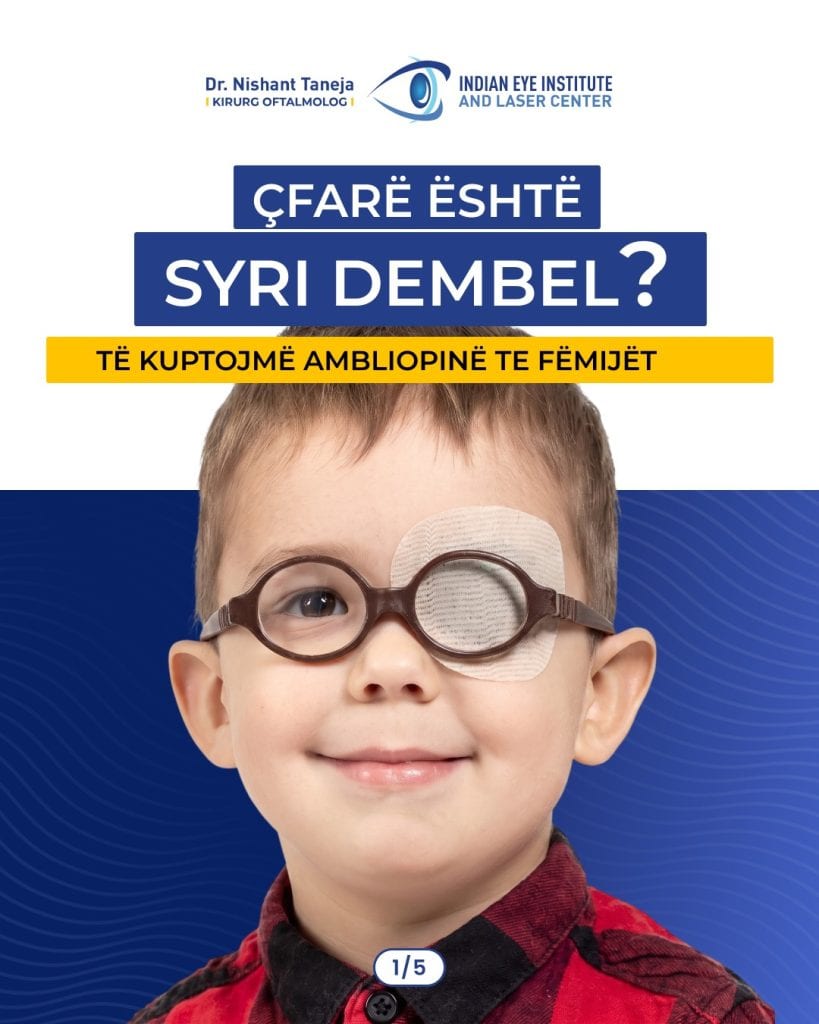
With lazy eye (amblyopia), vision in one eye does not develop properly. According to the NHS, treatment works best when started before age 7, while vision is still developing. Treatment includes:
- glasses to correct the prescription;
- covering the stronger eye with an eye patch for several hours a day, for several months;
- drops that temporarily blur vision in the stronger eye so the lazy eye has to work harder.
Strabismus surgery straightens the eyes, but does not by itself improve vision in the lazy eye. Therefore, amblyopia treatment continues after surgery when needed.
What else does a pediatric ophthalmologist treat?
In addition to glasses prescriptions, strabismus and lazy eye, a pediatric ophthalmologist also monitors:
- a blocked tear duct, when tears do not drain properly;
- a drooping eyelid (ptosis), one of the causes of lazy eye; see drooping eyelid (ptosis);
- the retina in babies born prematurely (retinopathy of prematurity);
- congenital cataracts and glaucoma, which appear at birth or in early childhood.
Children’s eye doctor in Tirana
At Indian Eye Institute & Laser Center (the Indian Eye Clinic) in Tirana, Dr. Nishant Taneja provides comprehensive eye exams for children, using age-appropriate tests and the Plusoptix pediatric refractometer. A comprehensive examination for strabismus takes about two hours. We offer myopia management for children, treat strabismus and amblyopia, and open blocked tear ducts in children under short general anesthesia. Dr. Taneja’s areas of expertise also include pediatric ophthalmology: congenital cataracts and glaucoma, and retinopathy of prematurity.
From Dr. Nishant Taneja’s experience: At the first appointment, parents most often ask whether their child will need glasses and whether using a phone has damaged their eyes. We answer only after fully examining the child, because the answer differs from one child to another.
Frequently asked questions
Does my child need to know how to read for an eye exam?
No. We use pictures, symbols and devices that don’t require the child to respond. The child doesn’t even need to speak.
Why does my child blink or flutter their eyelids so often?
It’s usually nothing to worry about. The most common causes are an uncorrected glasses prescription, problems with the surface of the eye, tics and misaligned eyes. Even so, if your child blinks a lot, we recommend an appointment with a pediatrician or ophthalmologist.
My child seems to see well. Do they need an eye exam?
Yes, according to the age-based schedule. Lazy eye and a glasses prescription in one eye often cause no noticeable signs: the child uses their better eye and doesn’t complain.
Can strabismus still be treated as a child gets older?
Yes. Strabismus can also be treated in adulthood, but lazy eye is best treated during childhood. For adults, see strabismus in adults.
Sources
- American Academy of Ophthalmology — Eye Screening for Children
- American Academy of Ophthalmology — How Photos Can Help Diagnose Children’s Eye Problems
- American Academy of Ophthalmology — Excessive Blinking in Children
- AAPOS — Nystagmus
- National Eye Institute — Farsightedness (Hyperopia) · Astigmatism
- NHS — Eye tests for children
- NHS — Lazy eye
- NHS — Retinoblastoma: symptoms
- NHS — Short-sightedness (myopia)
Would you like to have your child’s eyes checked? Book a pediatric eye exam at Indian Eye Institute & Laser Center in Tirana. Book an appointment · Tel. +355 67 50 30 017