



In brief: SMILE Pro vs. Femto-LASIK: both correct your glasses prescription by reshaping the cornea with a laser, but Femto-LASIK creates a thin flap in the cornea, while SMILE Pro removes a disc of tissue through a small incision, without a flap. Neither is better for everyone. The examination determines the method: based on corneal thickness and shape, your prescription, dry eye, and lifestyle.
SMILE Pro vs. Femto-LASIK: what is the main difference?
The cornea is the clear layer at the front of the eye. With myopia, hyperopia, and astigmatism, light does not focus correctly on the retina. Both methods use a laser to remove a carefully calculated amount of corneal tissue so that light can focus more accurately.
Before choosing a method, read what myopia is and why your prescription needs to be stable before laser surgery.
The difference between SMILE Pro and LASIK is the approach: with a flap or without one. Most of the differences in recovery, dry eye, and sports stem from this.
How does Femto-LASIK work?
Femto-LASIK is LASIK in which the corneal flap is created with a femtosecond laser, not a mechanical blade:
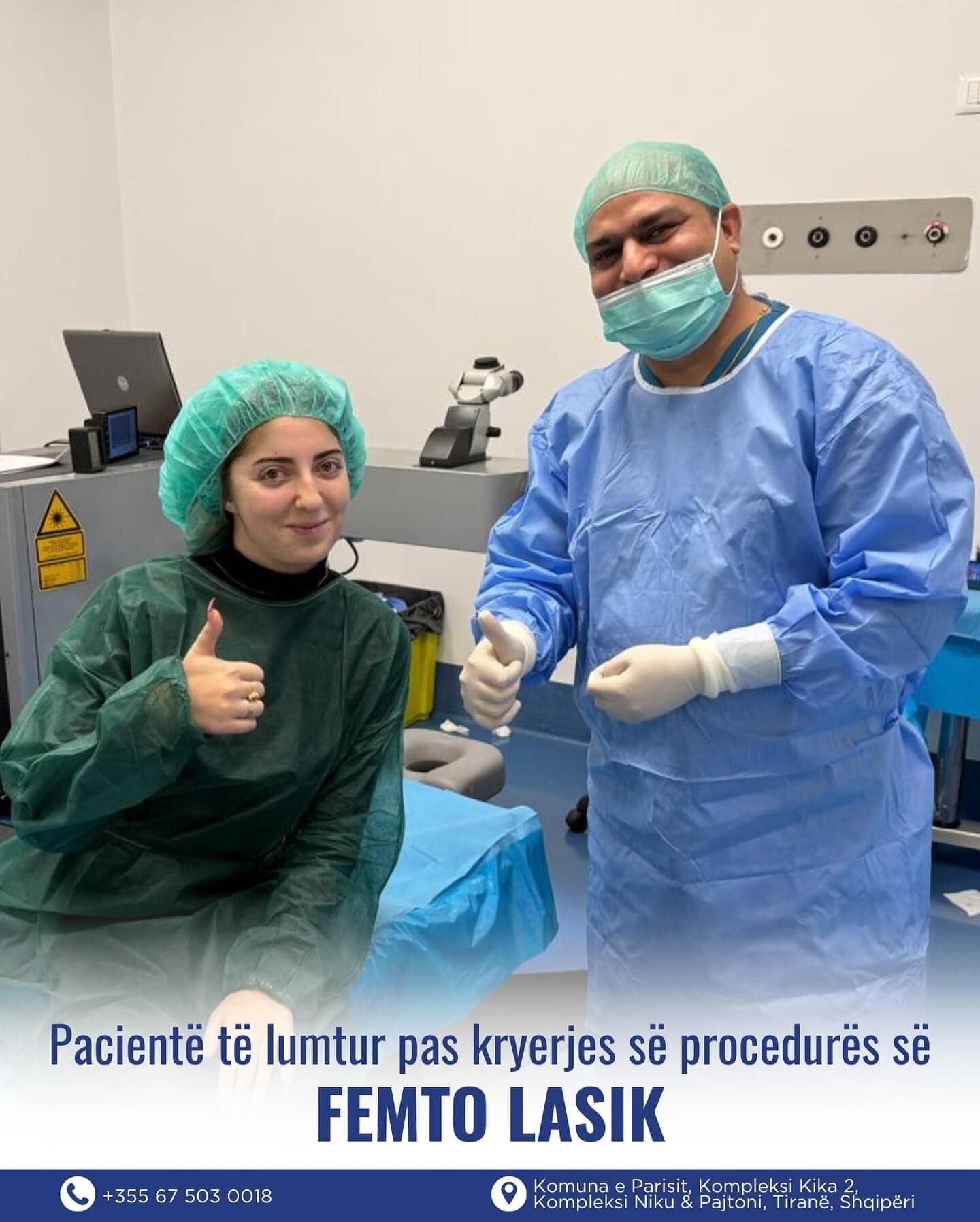
- The eye is numbed with drops, and a suction ring holds it still; you feel pressure for a few moments.
- The femtosecond laser cuts a flap as thin as a sheet of paper, which remains attached on one side.
- The surgeon lifts the flap, and the excimer laser reshapes the tissue underneath.
- The flap is returned to its place and adheres on its own, without stitches.
According to the American Academy of Ophthalmology (AAO), LASIK corrects myopia, hyperopia, and astigmatism. At the clinic, Femto-LASIK uses a femtosecond laser to create the flap and an excimer laser for the correction.
How does SMILE Pro work?
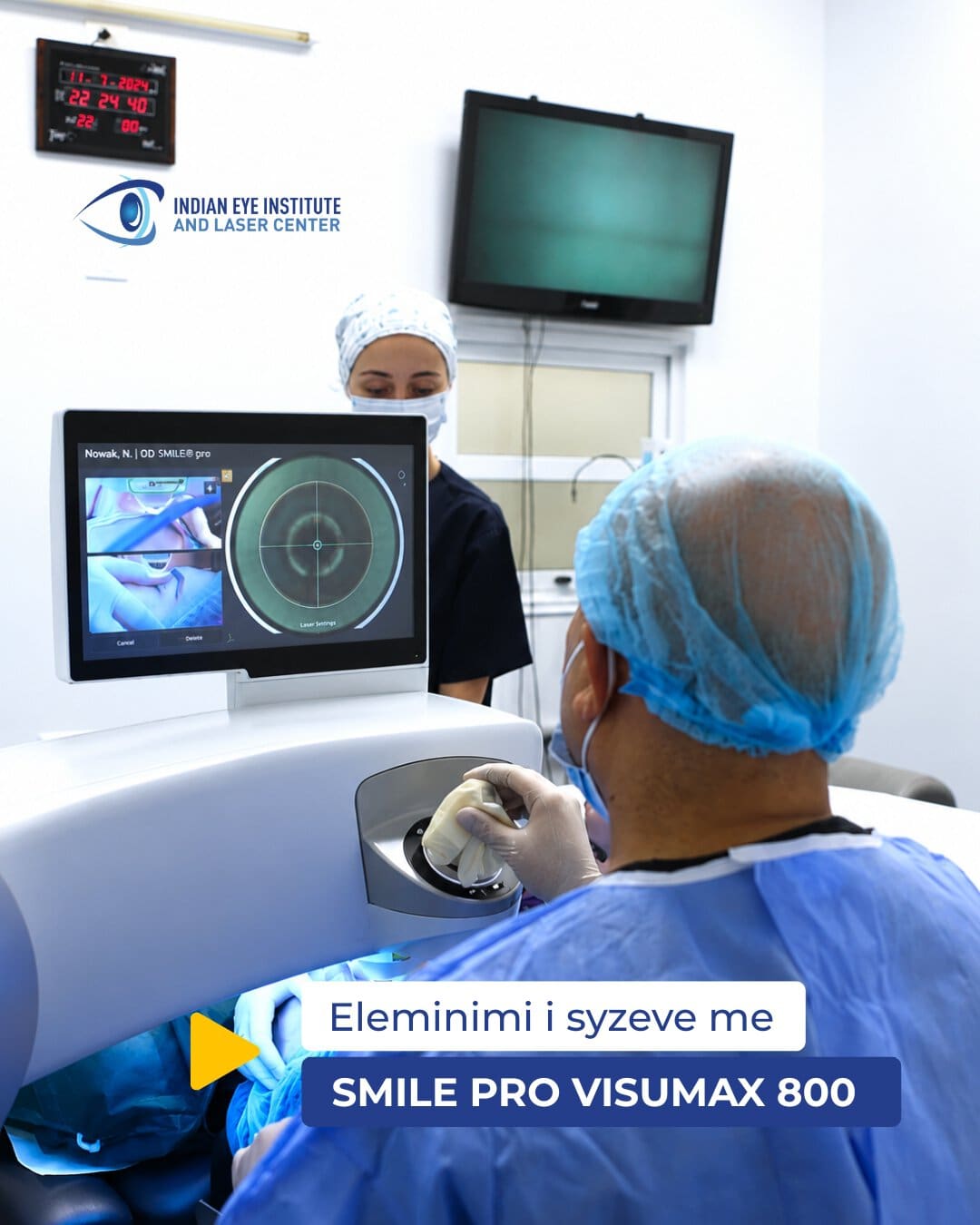
SMILE comes from the English Small Incision Lenticule Extraction, meaning the removal of a lenticule through a small incision. The femtosecond laser creates a thin disc of tissue (the lenticule) inside the cornea, along with a side incision. The surgeon removes the lenticule, and the cornea takes on its new shape. There is no flap, and no excimer laser is used.
SMILE Pro is the SMILE method performed with the ZEISS VISUMAX 800 laser, which, according to the manufacturer, creates the lenticule in less than 10 seconds for myopia. In the US, SMILE is FDA-approved for myopia and astigmatism; according to ZEISS, where permitted, SMILE Pro also corrects hyperopia. At the clinic, Dr. Nishant Taneja performs the SMILE Pro procedure with ZEISS VISUMAX 800. Indian Eye Institute & Laser Center is the only clinic in Albania with SMILE Pro and the ZEISS VISUMAX 800 laser.
How do Femto-LASIK and SMILE Pro compare, point by point?
| Femto-LASIK | SMILE Pro | |
|---|---|---|
| Approach to the tissue | Thin flap | Small incision, no flap |
| Lasers | Femtosecond + excimer | Femtosecond laser only |
| What it corrects | Myopia, hyperopia, astigmatism | Myopia, astigmatism; hyperopia where approved |
| The first few days | Most people work and drive the next day | Vision becomes clearer over the next few days; most activities can resume after 1–2 days |
| Dry eye | Common in the first few weeks | Common, with less damage to the corneal nerves |
| Specific risk | The flap can shift after an impact (rare) | Residual tissue or inflammation in the lenticule area |
| Accuracy (one meta-analysis) | The target prescription is achieved slightly more often with LASIK | Similar safety and effectiveness to LASIK |
| Reading glasses after age 40 | Does not prevent them | Does not prevent them |
What differs in recovery and dry eye?
According to the AAO, almost everyone experiences dry eye and vision that fluctuates throughout the day after LASIK; this usually settles within a month. The FDA warns that dry eye can be severe and permanent in some people. This is caused by cutting the corneal nerves.
With SMILE Pro, the incision is smaller. A meta-analysis of five studies (Kobashi et al., Cornea, 2017) found that, during the first six months, the cornea was more sensitive and complaints of dry eye were less common after SMILE (based on the same principle as SMILE Pro) than after Femto-LASIK. Dry eye can also occur after SMILE Pro.
With Femto-LASIK, the flap heals in place but remains. According to the AAO, the risk of it shifting is very low, but it is higher for people who may be hit in the face, such as boxers or military personnel. With SMILE Pro, there is no flap, but tissue may remain or inflammation may develop where the lenticule was removed.
With both procedures, halos around lights at night can occur, especially with large pupils, and the correction may be slightly under- or overdone. This can often be corrected with glasses or an enhancement procedure. According to the AAO, vision usually stabilizes around six months after surgery.
Who can have SMILE Pro or Femto-LASIK, and who cannot?
Whether you are a candidate for laser surgery depends on your eyes, not just your prescription. According to the AAO and FDA, the general requirements are:
- age 18 or older for LASIK, preferably over 21; in the US, SMILE is approved from age 22;
- a prescription that has not changed significantly over the past year;
- a cornea that is thick enough, healthy, and regularly shaped;
- healthy eyes and realistic expectations.
Laser surgery is generally not recommended, or requires special assessment, for people with keratoconus, very thin corneas, very dry eyes, during pregnancy or breastfeeding, with uncontrolled diabetes, advanced glaucoma, or cataracts that impair vision. The FDA also lists contact sports and occupations that do not allow certain refractive procedures.
In a clinic video, Dr. Nishant Taneja mentions three cases where laser surgery is not recommended: very dry eyes, a very thin cornea, and a very high prescription.
What if your prescription is very high or your cornea is not suitable for laser surgery?
- PRK. The outer layer of corneal cells is removed, and the excimer laser works on the surface. There is no flap, which is why the AAO mentions it for thinner corneas and very active people. Recovery is slower: pain for 2–3 days and a month or more before reaching the best vision.
- Phakic lenses (ICL). A thin lens is placed inside the eye, between the iris and the natural lens, through a small incision, without reshaping the cornea. According to the AAO, it is used for moderate to high myopia and astigmatism, including in people with thin or irregular corneas, and it can be removed.
- Lens replacement. The natural lens is replaced with an artificial one, as in cataract surgery. In a clinic reel, trifocal lenses are mentioned for very high prescriptions; see multifocal lens surgery.
Neither laser procedure prevents the need for reading glasses after age 40; options are available through presbyopia correction.
How does the examination determine the method?
A thorough examination is performed before laser surgery. At the clinic, it takes about 90–120 minutes and measures your prescription (including after drops that dilate the pupils), maps and measures the thickness of your cornea to rule out keratoconus, assesses your tear film and pupil size in the dark, and checks your retina, optic nerve, and eye pressure. Contact lenses must be stopped beforehand because they temporarily change the shape of the cornea.
The results are then considered alongside your lifestyle. A thin or irregular cornea may point to PRK or ICL. Dry eye is treated first. Contact sports may favor flap-free methods. Sometimes glasses or contact lenses remain the best option: the AAO is clear that no single method is best for everyone.
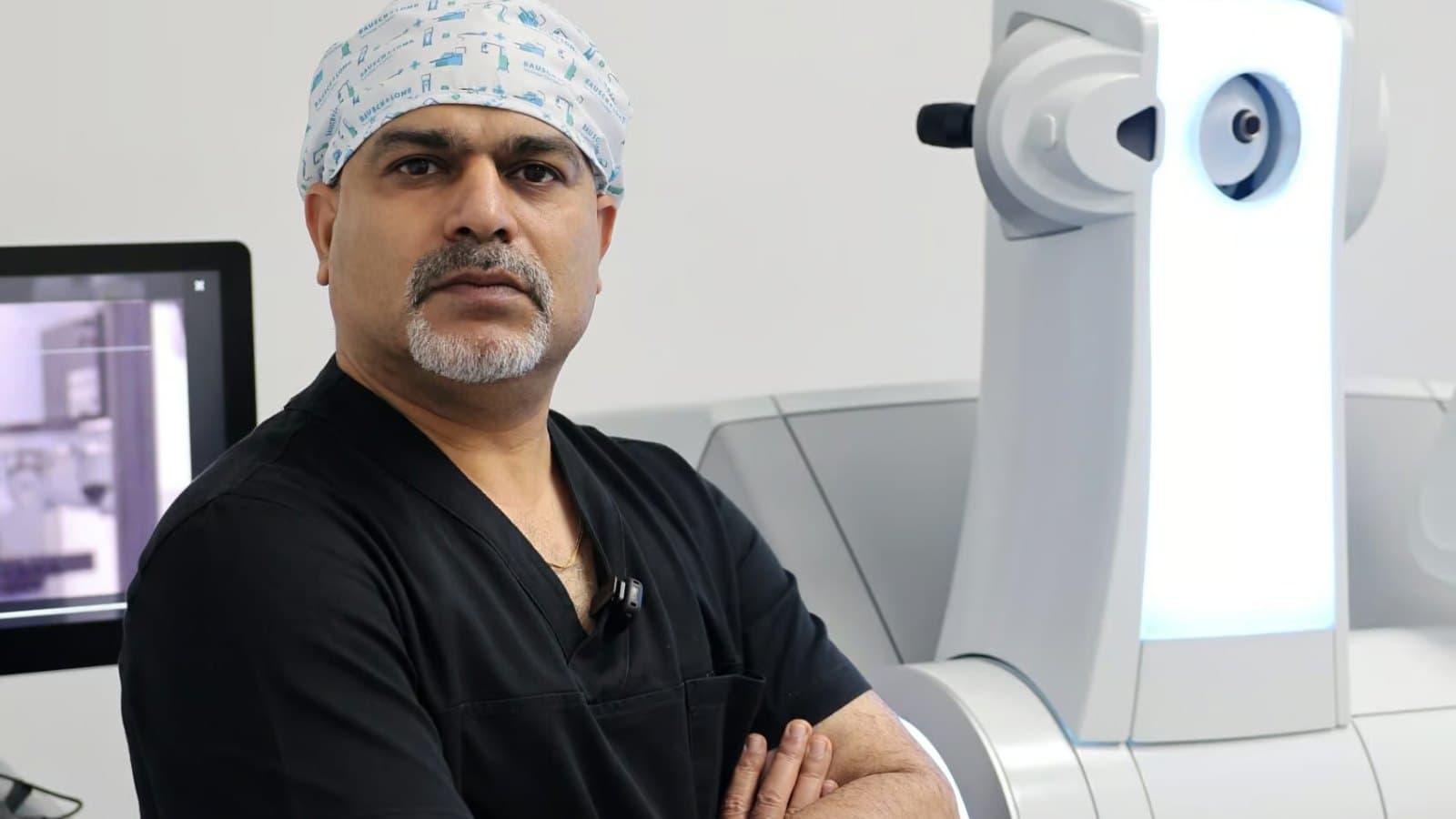
The decision is made by Dr. Nishant Taneja, ophthalmic surgeon. Learn about all the clinic’s methods on the laser eye surgery in Tirana page.
Frequently asked questions
Is SMILE Pro better than Femto-LASIK? Not for everyone. Studies find similar safety and results. SMILE Pro has no flap and affects fewer nerves; Femto-LASIK corrects a wider range of prescriptions and vision recovers quickly.
Does the procedure hurt? The eye is numbed with drops, and during the procedure you mainly feel pressure. After LASIK, your eyes may burn or feel scratchy for a few hours; after PRK, pain usually lasts 2–3 days.
Are both eyes operated on the same day? According to the NHS, usually yes. The FDA notes that having the procedures on different days allows the doctor to see how the first eye heals. The decision is made with your surgeon.
Will I need glasses again? Yes, in some cases: if your prescription changes over the years or for reading after age 40. With either method, an enhancement procedure may also be possible if the cornea allows it.
Sources
- American Academy of Ophthalmology — LASIK: Laser Eye Surgery
- AAO — What Is Small Incision Lenticule Extraction?
- AAO — What Is Photorefractive Keratectomy (PRK)?
- AAO — Implantable Collamer Lens (ICL)
- AAO — Alternative Refractive Surgery Procedures
- AAO — Laser Surgery Recovery
- AAO — What Is Refractive Surgery?
- FDA — LASIK · What are the risks…? · When is LASIK not for me?
- NHS — Laser eye surgery and lens surgery
- ZEISS — VISUMAX 800
- Kobashi H, Kamiya K, Shimizu K. Dry Eye After Small Incision Lenticule Extraction and Femtosecond Laser-Assisted LASIK: Meta-Analysis. Cornea 2017;36(1):85–91. PubMed 27560032
- Yao L et al. SMILE and LASIK Used to Treat Myopia and Myopic Astigmatism: A Systematic Review and Meta-analysis of Randomized Clinical Trials. Semin Ophthalmol 2023;38(3):283–293. PubMed 35912896
Want to know which method is right for your eyes? Book a pre-laser examination at Indian Eye Institute & Laser Center in Tirana. The examination will show whether you are a candidate for laser surgery and which method is right for you. Book an appointment · Tel. +355 67 50 30 017