

In brief: Myopia in children means they can see well up close but have blurry distance vision, such as when looking at the classroom board. It usually starts at school age, and the prescription increases as the child grows, up to around age 20. The earlier it starts, the more severe it can become. That’s why correcting children’s vision with glasses alone isn’t enough: we can slow the progression of myopia with special glasses, low-dose atropine drops, or special contact lenses. Spending time outdoors helps especially to delay the onset of myopia or prevent it altogether.
How can parents tell if their child is nearsighted?
Children rarely complain about blurry vision because they don’t know what they’re supposed to see. Watch for whether your child:
- squints or narrows their eyes to see things in the distance;
- sits very close to the TV or screen, or holds a book close;
- says they can’t see the board in class, or their teacher tells you they copy from a classmate;
- complains of headaches or tired eyes after school;
- rubs their eyes often.
Mild myopia may not cause any symptoms. That’s why we recommend having your child’s eyes checked even if they don’t complain. We explain when and how often in our article on how often you should have your eyes checked.
Why is myopia becoming more common in children?
Myopia occurs when the eye grows a little longer than it should from front to back, causing light to focus in front of the retina. Several factors can contribute in children:
- Nearsighted parents. If one or both parents are nearsighted, the child is more likely to become nearsighted too.
- Lots of close-up work. Reading or using a phone or tablet for hours without breaks is associated with more myopia, although the exact cause is still being studied.
- Not enough time outdoors. Children who spend more time in daylight are less likely to become nearsighted.
Myopia is becoming more common around the world. According to the American Academy of Ophthalmology (AAO), nearly half of the world’s population could be nearsighted by 2050.
When should you take your child to an eye doctor?
- At regular checkups, even if there are no symptoms.
- As soon as you notice any of the signs above, or if the teacher raises concerns about your child’s vision.
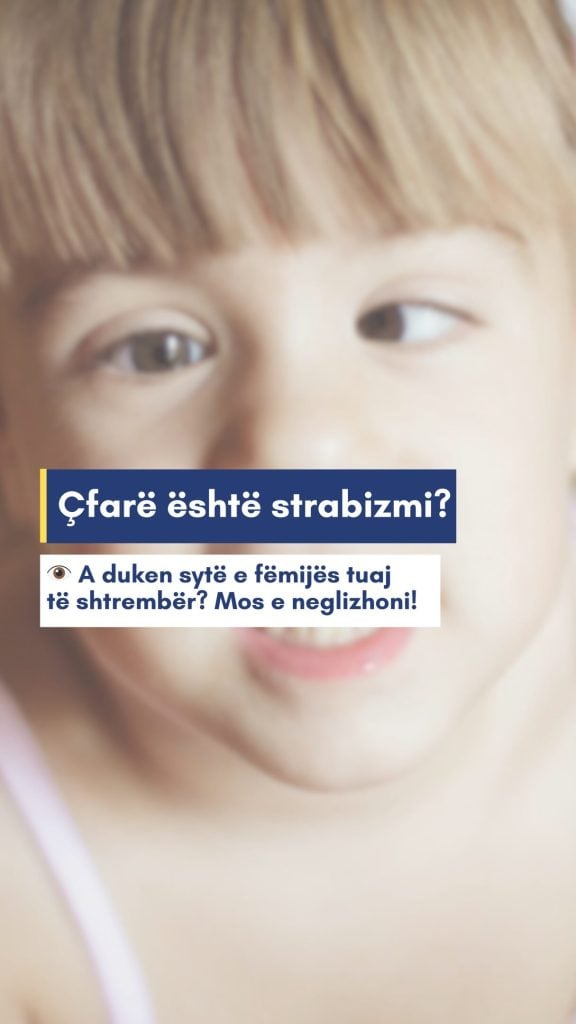
- Immediately, without waiting for an appointment, if your child has a white pupil in flash photos, one eye turns inward or outward (strabismus in children), their vision suddenly becomes very poor, or they have an eye injury.
How do we monitor myopia in children?
In children, the muscle that focuses the eye is very strong and can mask their true prescription. That’s why we use drops to temporarily relax this muscle, and only then measure their glasses prescription. For a few hours after the drops, your child may have blurry near vision and be sensitive to light; this goes away on its own. We also check the health of the eye and retina. We explain what to expect during your child’s appointment in our article about an eye doctor for children.
We usually check children with myopia every 6 months to see how quickly their prescription is increasing. This helps us decide whether treatment is needed to slow it down.
How can myopia be slowed in children?
Regular glasses correct vision but don’t stop the prescription from increasing. Slowing this progression is called myopia control. At our clinic, we do this in the following ways:
| Method | How it works | What to know |
|---|---|---|
| Low-dose atropine eye drops | one drop daily, before bed, for several years | According to the AAO, they stop or slow myopia in around 7 out of 10 children; they may cause redness or itching around the eye and, in some children, light sensitivity; they are only available with an eye doctor’s prescription because regular atropine from the pharmacy is much stronger |
| Special glasses for myopia control | The lenses have areas around the edges that change the focus and slow the eye’s elongation | They look like regular glasses and are worn throughout the day; they don’t work the same way for every child |
| Multifocal contact lenses | Like special glasses, but worn in the eye | For older children who can handle contact lenses carefully; they carry a risk of infection and require careful hygiene |
| Orthokeratology (rigid lenses worn at night) | temporarily flatten the cornea | The child can go without glasses during the day; there is a risk of serious infections, so the child needs close monitoring |
Dr. Nishant Taneja decides which method is right for your child after an examination, based on their age, prescription, and how quickly it is progressing. Sometimes we combine methods. None of these methods cures myopia or reduces the prescription; the goal is to limit how much it increases. Treatment usually lasts several years, and the doctor decides when to stop.
What parents can do every day
- Time outdoors every day. We recommend at least 1–2 hours a day in daylight, playing, walking, or doing sports.
- Less screen time. For children, we recommend no more than 1–2 hours of screen time a day outside of schoolwork.
- Breaks during close-up work. Every 20 minutes of reading or screen time, have your child look at something far away for about 20 seconds. This relaxes the eyes.
- Good lighting for reading, and keep books and screens at a comfortable distance from the eyes.
These habits do not replace treatment when the prescription is worsening quickly, but they can help.
Questions parents ask us
Do glasses make myopia worse?
No. Glasses do not weaken the eyes. Glasses with a prescription that is too weak do not slow myopia either, and some studies have found that they can speed it up. That is why we give children the correct prescription.
Does myopia go away as a child grows?
No, myopia does not go away on its own. It usually worsens during the school years and stabilizes around the age of 20. That is why it is important to slow it down while the child is still young.
Can children have laser eye surgery?
No. Laser surgery is only performed after age 18 and when the prescription has been stable for at least a year. For adults, we explain the vision correction options in our article Myopia: what it is and how it’s treated.
Why does it matter if myopia becomes severe?
High myopia, around −6.00 or stronger, increases the risk of eye problems later in life, such as retinal detachment, macular damage, glaucoma or earlier cataracts. Glasses, contact lenses or laser surgery can correct vision, but the eye remains longer, so this risk persists even after laser surgery. This is the main reason we try to keep the prescription as low as possible from childhood.
Sources
- American Academy of Ophthalmology — Nearsightedness: What Is Myopia?
- American Academy of Ophthalmology — Prescription for Keeping Children Out of Glasses: Sunshine
- American Academy of Ophthalmology — Eye Screening for Children
- NHS — Short-sightedness (myopia)
- International Myopia Institute — IMI Clinical Management Guidelines Report (IOVS, 2019)
- Holden BA et al. Global prevalence of myopia and high myopia… Ophthalmology, 2016
Book an eye exam for your child. If your child has any of the signs above or their glasses prescription increases every year, book an appointment at Indian Eye Institute & Laser Center, Rruga Robert Shvarc, Tirana. Book an appointment · Tel. +355 67 50 30 017