



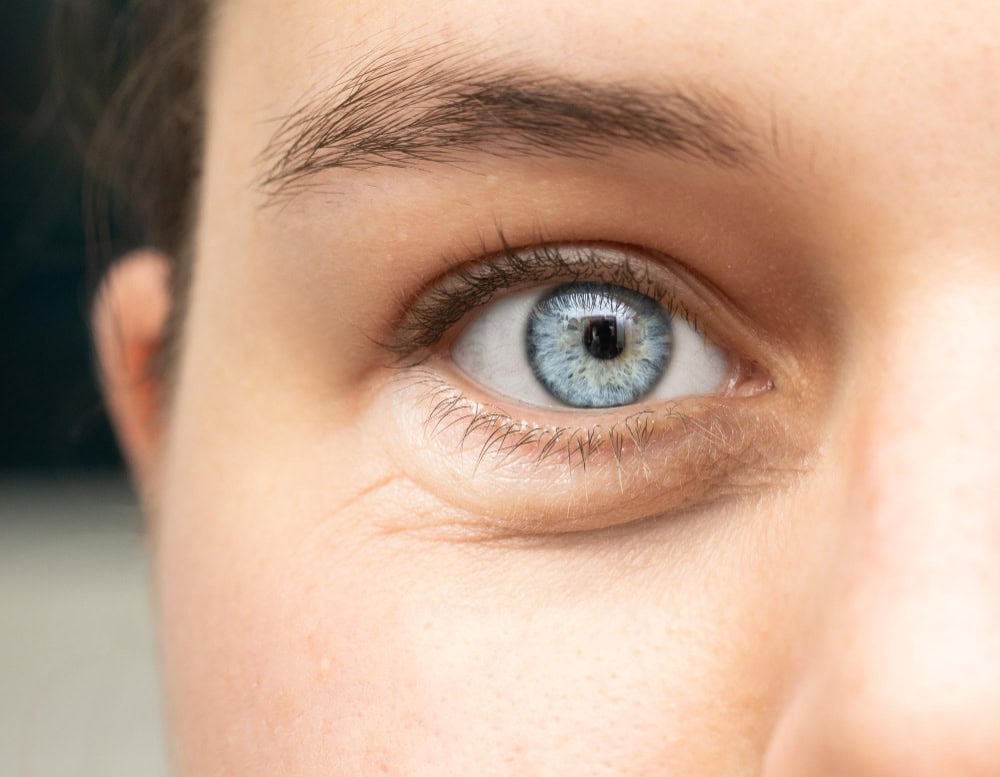
Glasses and contact lenses are useful solutions for vision correction, but for many people they can become an inconvenience at work, during physical activity, or in their daily routine. Refractive laser surgery can reduce dependence on these optical aids, and one of the most advanced methods available today is SMILE PRO.
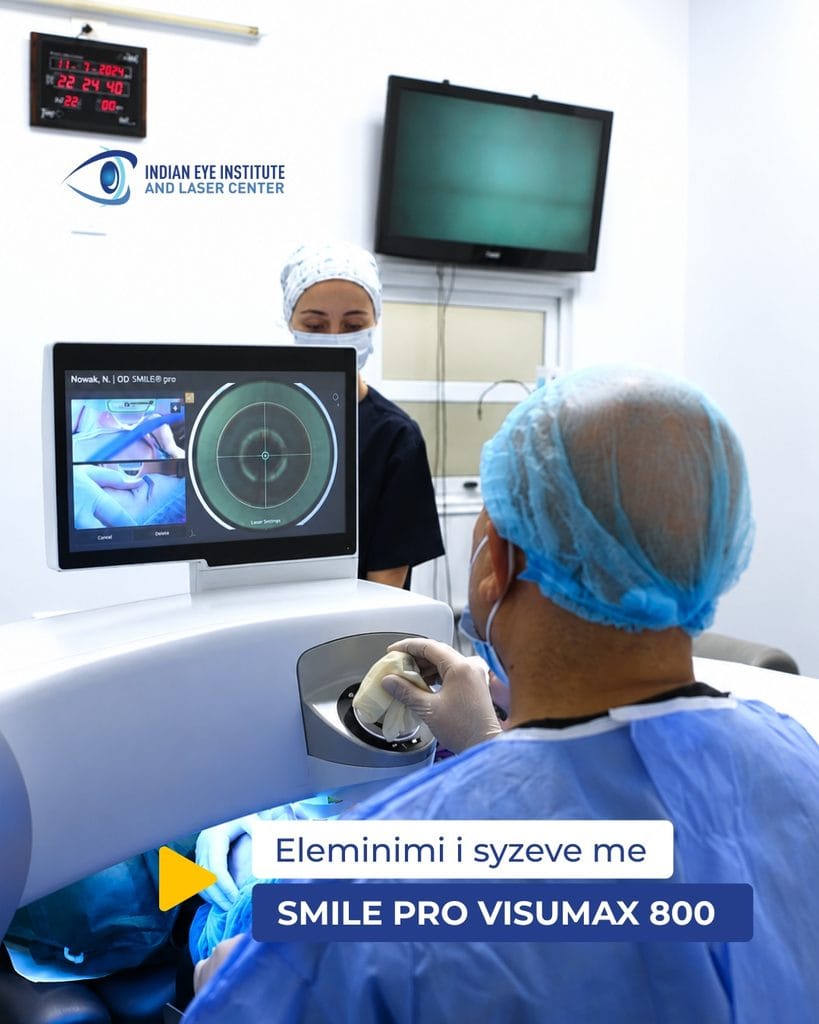
At the Indian Eye Institute and Laser Center in Tirana, the SMILE PRO procedure is performed using the ZEISS VISUMAX 800 platform, installed under the direction of Dr. Nishant Taneja in March 2025. This technology uses a femtosecond laser to correct refractive errors through a very small incision in the cornea, without creating a corneal flap.
What Is SMILE PRO?
SMILE stands for “Small Incision Lenticule Extraction”. During the procedure, the femtosecond laser creates a very thin layer of tissue within the cornea, known as a lenticule, as well as an opening only a few millimetres wide.
The surgeon removes the lenticule through this opening, precisely reshaping the cornea so that light can focus more accurately on the retina.
Unlike FEMTO-LASIK, SMILE PRO does not involve creating or lifting a flap on the surface of the cornea. The procedure is performed using a single laser platform and preserves more of the cornea’s upper layers.
The aim of the treatment is to reduce dependence on glasses or contact lenses. However, outcomes may vary from one patient to another, and it cannot be guaranteed that glasses will never be needed again in any situation, particularly following the natural age-related changes in vision.
What Sets the ZEISS VISUMAX 800 Apart?
The ZEISS VISUMAX 800 is an advanced femtosecond laser platform used to perform the SMILE PRO procedure. Depending on the type of correction, the lenticule creation stage takes only a few seconds.
The short laser time can make the experience more comfortable and reduces the length of time the patient must keep their eye in the instructed position.
The platform includes systems that assist with centration, positioning, and personalised treatment planning. However, technology is only one part of the process. The outcome also depends on an accurate preoperative examination, appropriate patient selection, the surgeon’s experience, and adherence to post-procedure instructions.
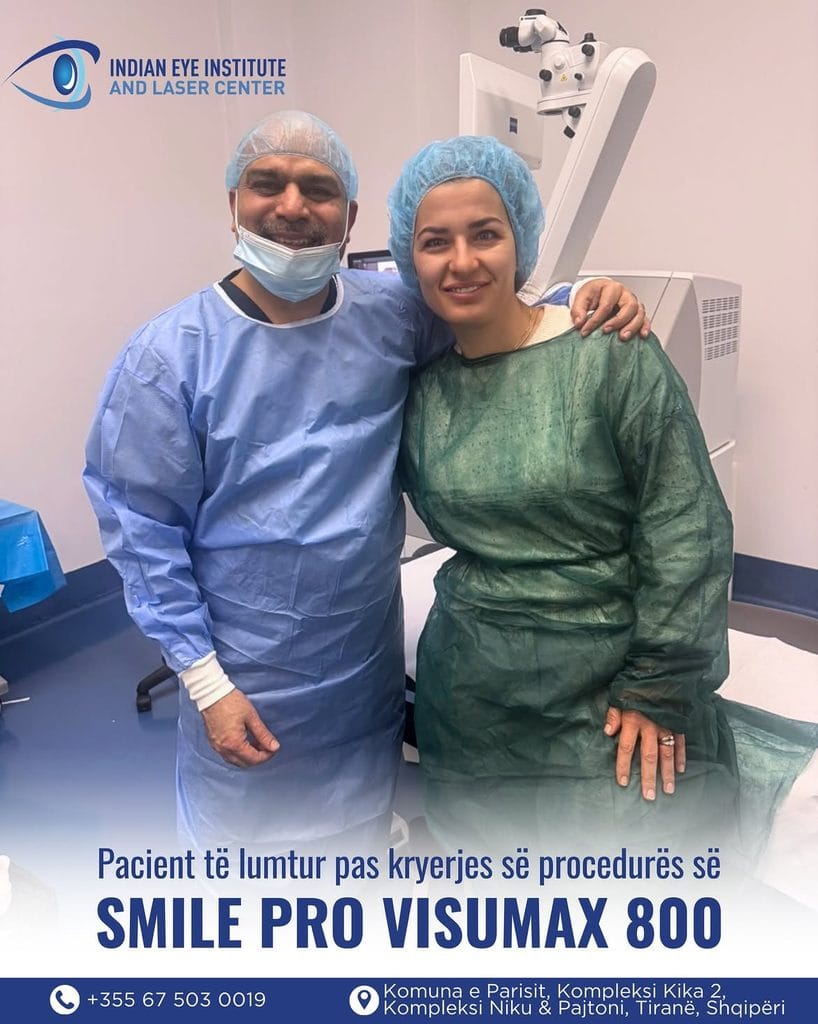
The Indian Eye Institute and Laser Center was the first centre in Albania to install the ZEISS VISUMAX 800 for vision correction. Procedures are performed under the care of Dr. Nishant Taneja, a refractive surgeon with more than 20 years of surgical experience and expertise in SMILE PRO, FEMTO-LASIK, and PRK.
Who may be suitable for SMILE PRO?
SMILE PRO may be considered for patients with myopia or hyperopia, with or without astigmatism, within the approved treatment ranges. However, suitability is not determined solely by the number of diopters.
In general, candidates should be over 18 years old, have had a stable prescription for at least 12 months, and have a cornea with a suitable shape, thickness, and stability. The ocular surface should also be healthy, and expectations regarding the procedure should be realistic.
SMILE PRO may not be a suitable option for patients with keratoconus, severe dry eye, active infections, cataracts, uncontrolled glaucoma, or certain other ocular and systemic conditions.
Pregnancy and breastfeeding may temporarily affect prescription stability. For this reason, a decision is made only after a comprehensive eye examination.
What does the pre-procedure examination involve?
Before SMILE PRO, detailed measurements are taken to assess not only the prescription but also the structure and overall health of the eye. The evaluation may include:
- Visual acuity testing and refraction analysis
- Corneal topography and tomography
- Measurement of corneal thickness
- Pupil and centration assessment
- Assessment of the tear film and ocular surface
- Comprehensive eye health examination
If the patient wears contact lenses, they may need to stop wearing them for a period before the measurements, as lenses can temporarily affect the shape of the cornea. The doctor will determine how long they should be discontinued based on the type of lenses worn.
The examination also helps compare SMILE PRO with other options, such as FEMTO-LASIK or PRK. The newest procedure is not automatically the best choice for everyone. The method should be tailored to the patient’s eye anatomy, prescription, lifestyle, and visual goals.
What happens on the day of the procedure?
Local anaesthetic eye drops are applied before treatment, so most patients experience little or no pain during the procedure. A special instrument keeps the eyelids open while the surgeon communicates with the patient and guides them on where to look.
The ZEISS VISUMAX 800 creates the lenticule and a small incision in the cornea. The surgeon then removes the lenticule through this opening, achieving the planned correction.
The laser stage lasts only a few seconds, while the entire procedure is usually completed within 5–10 minutes per eye.
The patient may feel mild pressure or a slight pulling sensation for a few moments. Once the procedure is complete, the necessary eye drops are applied and aftercare instructions are provided.
A family member or friend should be arranged in advance to accompany the patient home after the procedure, as the patient must not drive immediately afterwards.
What is recovery like after SMILE PRO?
Immediately after the procedure, vision may be blurred, and the eyes may water or be more sensitive to light. Mild irritation may also occur. These symptoms usually subside gradually.
Many patients notice an improvement within the first few hours or days and may return to their usual activities within a few days, as advised by their surgeon. Visual clarity continues to stabilise over the following weeks, and recovery time varies from person to person.
During this period, it is important to:
- Use the eye drops as prescribed by your doctor
- Avoid touching or rubbing your eyes
- Temporarily avoid wearing eye makeup
- Avoid swimming pools, dust, smoke, and strong winds
- Avoid contact sports and strenuous exercise
- Wear sunglasses outdoors
- Attend all scheduled follow-up appointments
Follow-up appointments are an essential part of the treatment, as they allow the healing process and vision stability to be monitored.
What Are the Potential Benefits of SMILE PRO?
The small incision and absence of a corneal flap are two of the key features of SMILE PRO. This method may better preserve the biomechanical stability of the cornea and affects fewer corneal nerves than procedures that require the creation of a flap.
Potential benefits include:
- Flap-free procedure
- An incision of only a few millimetres
- Only a few seconds under the laser
- Relatively quick recovery
- Fewer dry eye symptoms in some patients
- Reduced dependence on glasses or contact lenses
- Suitable for many people with active lifestyles
The potential benefits, limitations, and risks should be discussed individually with the surgeon, as every procedure requires careful evaluation and professional follow-up.
Is SMILE PRO the Right Choice for You?
This can only be determined after a comprehensive eye examination. At the Indian Eye Institute and Laser Center in Tirana, Dr. Nishant Taneja evaluates the structure of the cornea, refractive stability, ocular surface health, and the patient’s individual needs.
Based on the results, the most suitable option is determined—whether SMILE PRO, FEMTO-LASIK, PRK, or another alternative.
If you would like to find out whether SMILE PRO can correct your vision, book a consultation with Dr. Nishant Taneja and receive a personalized treatment plan tailored to your eyes and lifestyle.