



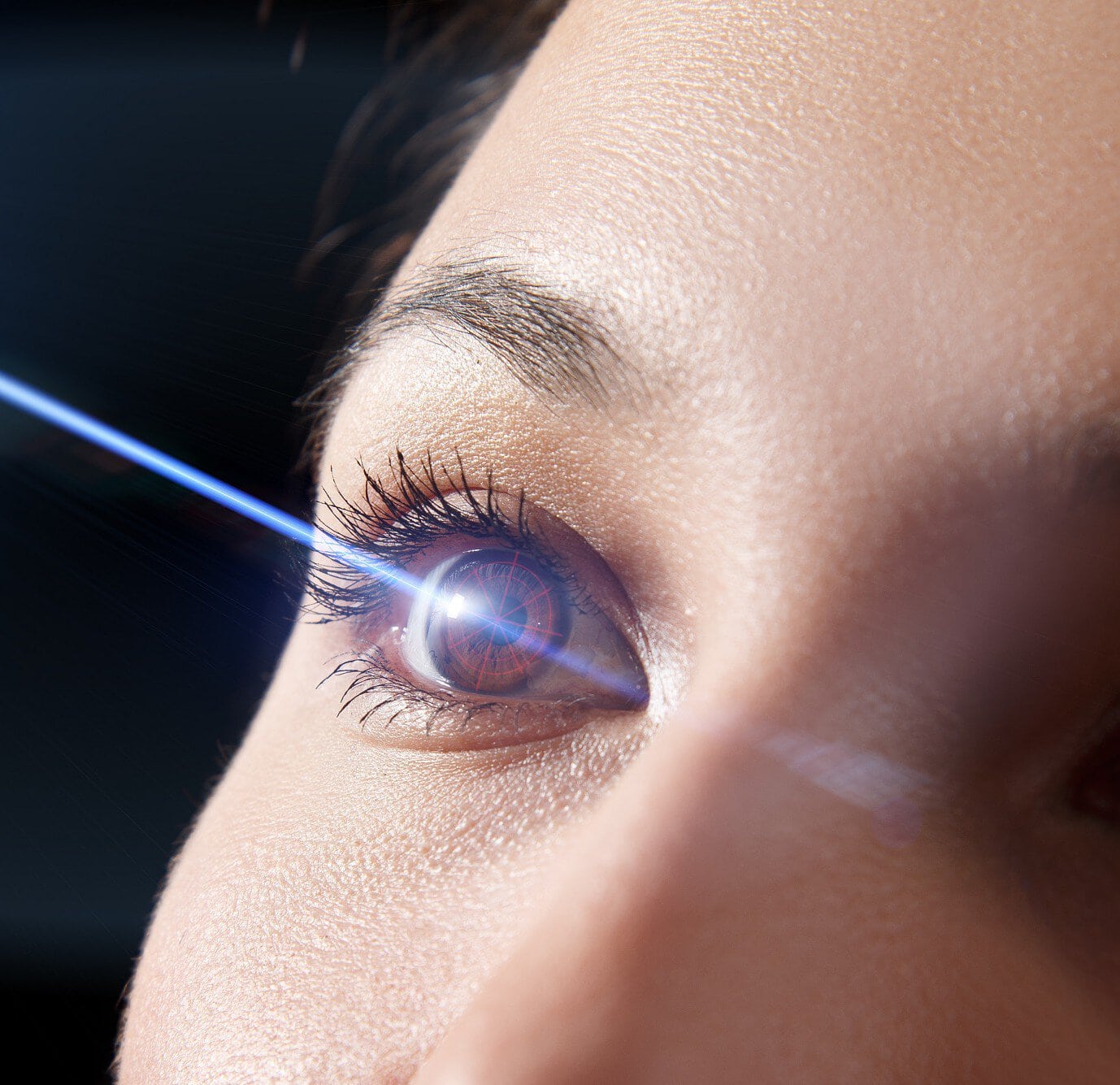
In brief: No, a cataract is not removed with the laser used to correct glasses prescriptions. When people search for “cataract laser treatment,” they often mean LASIK or SMILE Pro. These procedures change the shape of the cornea, the eye’s front “window,” and do not affect the lens where cataracts form. A cataract is removed with surgery: the cloudy lens is taken out and replaced with an artificial lens. Lasers are used in two other situations: for some steps of cataract surgery (femtosecond laser) and, months or years later, to treat “secondary cataracts” (YAG laser).
Cataracts and lasers: why three procedures get confused
The word “laser” is used for several different eye procedures, which causes confusion. Some people have heard of laser vision correction, others of “laser cataract surgery,” and others of the laser treatment performed after surgery. These are three different things, involving three different parts of the eye.
| Procedure | Where it works | What it does | Does it remove the cataract? |
|---|---|---|---|
| LASIK / SMILE Pro | cornea | corrects your glasses prescription | No |
| Femtosecond laser during cataract surgery | lens and capsule | performs some steps of the surgery | It helps, but the lens is still removed surgically |
| YAG laser after surgery | membrane behind the artificial lens | clears the “secondary cataract” | Treats clouding that develops after surgery |
1. Laser vision correction (LASIK, SMILE Pro) does not remove cataracts
Laser refractive surgery — LASIK, Femto-LASIK or SMILE Pro — changes the shape of the cornea so light focuses correctly. The goal is to no longer need glasses for nearsightedness, farsightedness or astigmatism. A cataract is not in the cornea, but in the lens deeper inside the eye, behind the iris. That’s why these procedures do not remove or slow down a cataract.
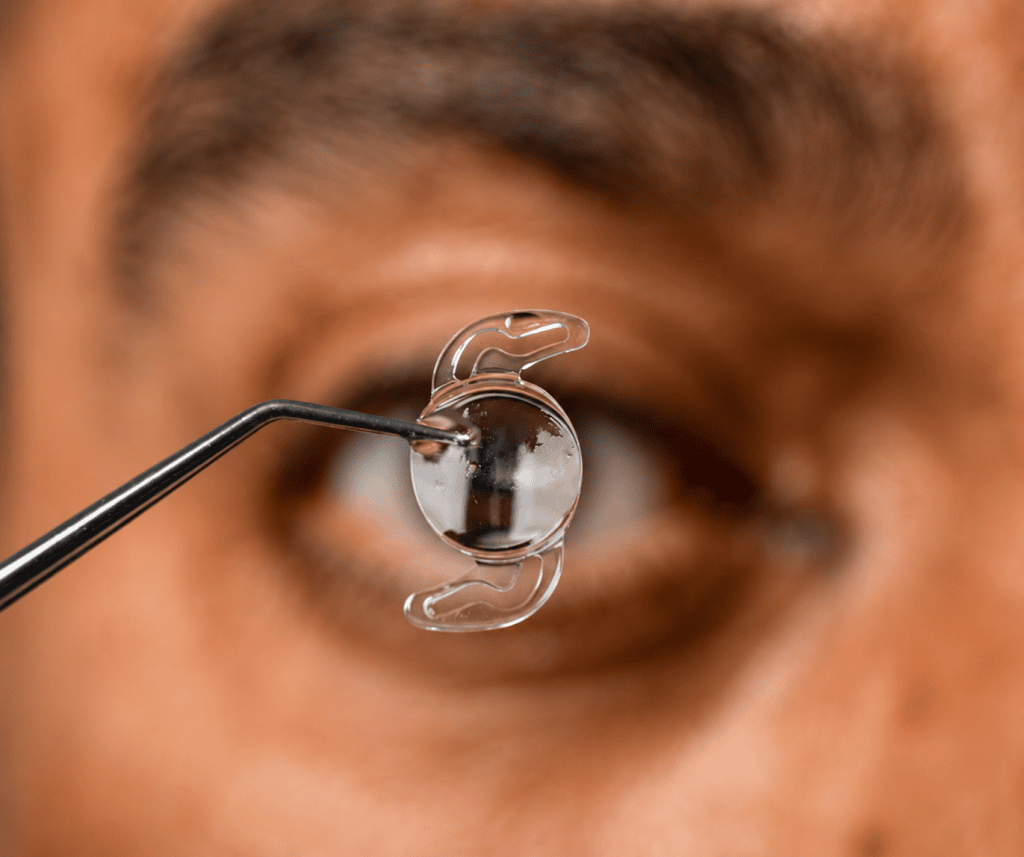
If you have both a cataract and a glasses prescription, the solution is usually cataract surgery itself: by choosing the right artificial lens, the doctor can also correct your glasses prescription at the same time. For those who want to rely less on glasses at all distances, multifocal lenses are also an option, though they are not suitable for every patient.
2. Femtosecond laser during cataract surgery
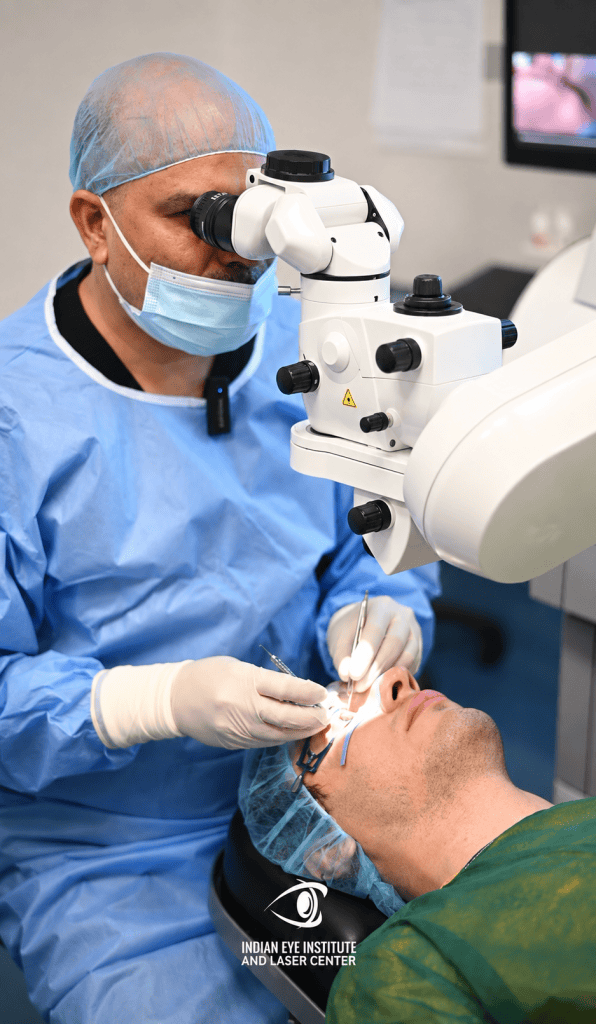
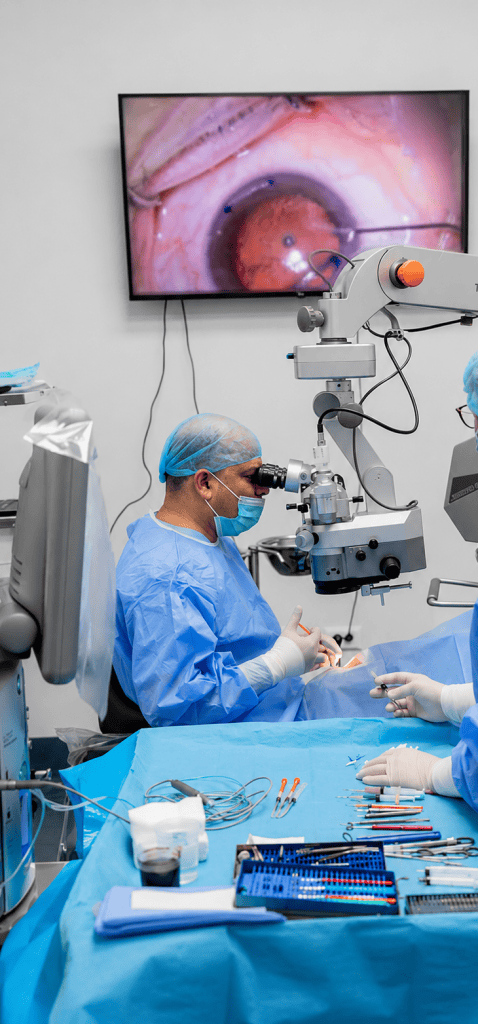
In conventional surgery, the surgeon uses instruments to make small incisions and open the capsule surrounding the lens. The lens is then broken up and removed using ultrasound (phacoemulsification). With a femtosecond laser, some of these steps — the incisions, opening the capsule and the initial fragmentation of the lens — are performed by the laser using computer-guided planning.
Even with a laser, the surgeon still removes the cloudy lens and inserts an artificial lens. So the laser does not “melt” the cataract; it performs some of the work the surgeon would otherwise do by hand. The large FEMCAT study (The Lancet, 2020, 907 patients) found that laser surgery did not produce better results than conventional surgery. British guidelines from NICE recommend laser surgery only as part of clinical studies. An assessment by the American Academy of Ophthalmology (AAO, 2022) also concluded that both methods are equally safe and effective, with neither better than the other.
At our clinic, cataract surgery is performed using phacoemulsification: small incisions and ultrasound.
3. “Secondary cataracts” and YAG laser after surgery
After surgery, the artificial lens sits inside the natural lens capsule. In some patients, months or years later, the back of the capsule becomes cloudy and vision becomes blurred again. Many call it “the cataract has come back” or a “secondary cataract,” but it is not a new cataract — the natural lens does not grow back.
This clouding is treated with a YAG laser: an outpatient procedure that takes about 5 minutes, during which the laser creates a small opening in the cloudy membrane. If there are no other eye problems, vision usually improves within about two days. This is the one case where it is accurate to say that “the cataract is removed with a laser.”
Like any procedure, YAG laser treatment has risks, which your doctor will explain beforehand: increased eye pressure, swelling in the eye, displacement of the artificial lens or retinal detachment. If you see a curtain-like shadow, many black spots or flashes of light after the procedure, contact your eye doctor immediately.
Who decides which method to use?
The method is not chosen based on advertising, but on an eye examination: the density of the cataract, the condition of the cornea, retina and optic nerve, your glasses prescription, and what you expect from your vision after surgery. Special measurements (biometry) are taken before surgery to select the lens power. Find out how each step is decided and carried out in Tirana on the page about cataract removal — cataract surgery.
Frequently asked questions
If I had LASIK years ago, can I have cataract surgery?
Yes. Cataract surgery can be performed after LASIK, but calculating the lens power requires special measurements, so tell your doctor that you’ve had laser vision correction.
Can I have laser vision correction after cataract surgery?
Sometimes, if a small glasses prescription remains, your doctor may be able to correct it later. This is decided once the eye has fully healed.
Is laser surgery safer?
Not necessarily. Safety depends mainly on the examination, the surgeon’s experience and post-operative care.
How can I tell if I have a cataract?
The most common signs are blurred vision, glare from lights at night and faded colors. We explain them on our page about cataracts: symptoms.
Sources
- NHS — Cataract surgery
- NHS — Cataract surgery: recovery
- American Academy of Ophthalmology — What Is LASIK?
- American Academy of Ophthalmology — What Are Cataracts?
- Roberts et al., FEMCAT, The Lancet 2020;395:212-224
- NICE NG77 — Cataracts in adults, recommendation 1.6.1
- AAO Ophthalmic Technology Assessment, Lin et al., Ophthalmology 2022;129:946-954
- American Academy of Ophthalmology — What Is Posterior Capsulotomy?
Not sure which procedure you need? A comprehensive examination can show whether you have a cataract and which solution is right for you. Visit us at the Indian Eye Institute & Laser Center in Tirana. Book an appointment · Tel. +355 67 503 0017