




In brief: Eyelid ptosis (blepharoptosis) is the drooping of the upper eyelid over the eye, usually caused by weakness of the muscle that lifts it or stretching of its tendon. In children, it can be present from birth and, if it covers the pupil, put visual development at risk. In adults, it most often develops with age. When it interferes with vision, it can be corrected with surgery. A suddenly drooping eyelid is an emergency.
What is eyelid ptosis?
Ptosis means that the edge of the upper eyelid sits lower than usual. It can be mild or severe enough to cover the pupil, and may affect one or both eyes. The levator muscle raises the eyelid and is attached to it by a tendon. When the muscle is weak or the tendon stretches, the eyelid droops. People call it a “drooping eyelid” or say, “my eyelid is drooping.”
In addition to affecting appearance, ptosis can cause eye strain while reading and forehead aches, because the eyebrows are constantly raised to open the eye. When the drooping is severe, a person may tilt their head back or lift the eyelid with a finger to see.
Ptosis in children: why does it matter for vision?
Congenital ptosis usually occurs because the levator muscle has not developed normally. A child may raise their chin or eyebrows to see beneath the eyelid, and the eyelid may look more droopy when they are tired.
Vision develops during the first few years of life, so ptosis in children can cause:
- amblyopia (“lazy eye”), when the eyelid covers the pupil and the eye is not used enough. Rarely, if the eye is completely closed, vision loss may be permanent;
- astigmatism, because the eyelid presses on the eye and changes its shape;
- neck problems from constantly raising the chin;
- strabismus in some children. See strabismus and lazy eye in children.
Not every child needs surgery. When the drooping is mild and vision is developing normally, the child is monitored with regular checkups. If the eyelid puts vision at risk, earlier surgery is recommended. Amblyopia is treated separately with glasses, patching the stronger eye, or eye drops. Every child with ptosis, whether or not they have had surgery, needs regular checkups: see how often you should have your eyes checked.
The clinic has also explained blepharoptosis in children in two Instagram videos.
Why does the eyelid droop in adults?
The most common cause is aging: the levator muscle tendon stretches or detaches, and the eyelid gradually descends. Ptosis can also occur:
- after eye surgery, including cataract surgery;
- after wearing contact lenses for many years;
- after an injury to the eye (see ocular trauma surgery);
- when the eyelid becomes heavy due to swelling, a cyst, or, rarely, a tumor;
- due to nerve or muscle disorders: myasthenia gravis (the eyelid droops more in the evening), Horner syndrome (the pupil on that side is smaller), damage to the third cranial nerve, diabetes, or a stroke.
When is a suddenly drooping eyelid an emergency?
Age-related ptosis develops gradually. Go to the emergency department immediately if the eyelid droops over the course of hours or days and you also have:
- pupils of different sizes;
- double vision;
- headache or eye pain;
- difficulty breathing, swallowing, or speaking.
These may be signs of an aneurysm (a bulge in a blood vessel in the brain) pressing on the third cranial nerve, or of a myasthenic crisis. Both are life-threatening. Even without other symptoms, a suddenly drooping eyelid requires an urgent visit to a doctor or ophthalmologist.
How is ptosis measured and diagnosed?
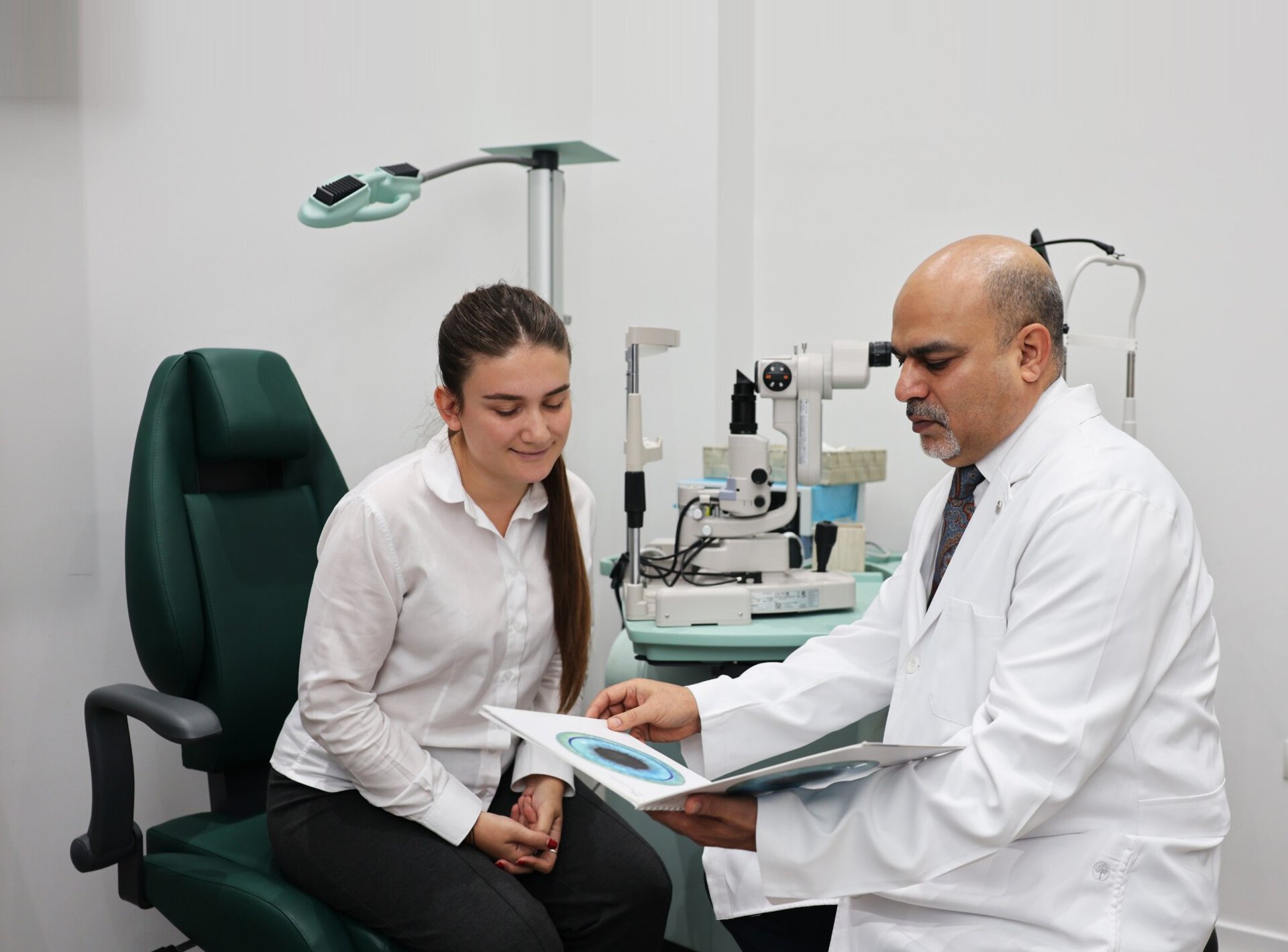
The ophthalmologist will ask when the eyelid started drooping and whether it changes during the day; old photographs can help. They will then measure the distance from the eyelid margin to the center of the pupil (MRD1), how far the eyelid moves from looking down to looking up (levator muscle function), the eyelid crease, and the field of vision. The pupils, eye movements, and, in children, need for glasses and head position are also checked. If myasthenia is suspected, blood tests and a visit to a neurologist are needed.
According to the service page, these measurements (MRD1, MRD2, levator muscle function) are performed as part of a comprehensive eye examination at Indian Eye Institute & Laser Center.
How is ptosis corrected?
Ptosis that does not affect your vision or bother you may simply be monitored. If it is caused by a condition such as myasthenia, the condition is treated first. Otherwise, the main treatment is surgery. The type of surgery depends on the strength of the levator muscle:
- Levator muscle shortening or advancement, when the muscle works but is weak. This is usually done through an incision in the eyelid crease, sometimes from the inside of the eyelid, without an incision in the skin.
- Frontalis sling, when the levator muscle barely works. The eyelid is connected to the forehead with a suture, silicone, or the patient’s own tissue, so the forehead muscle can lift it. This is most often used for congenital ptosis.
In adults, surgery is usually performed under local anesthesia, and patients go home the same day. Young children are usually operated on under general anesthesia. Surgery improves vision and appearance, but it does not restore the muscle to normal or guarantee perfect symmetry.
Some adults with acquired ptosis can also use prescription eye drops containing oxymetazoline. They lift the eyelid slightly for as long as they are used every day, but they are not effective for ptosis caused by scarring or nerve problems.
Indian Eye Institute & Laser Center treats ptosis in children and adults. According to the clinic’s website, surgery repairs the muscle or tendon that lifts the eyelid.
What is recovery like, and what are the risks?
Swelling and bruising usually improve within one to two weeks. Cold compresses, antibiotic ointment, and lubricating drops are used. Stitches are removed at a follow-up appointment, usually at the clinic after 7–10 days. Tell your surgeon if you take aspirin or blood thinners, but do not stop taking them without asking your doctor.
The main risks are an eyelid that sits slightly too low or too high, asymmetry, the eye not closing completely for a while and becoming dry, bleeding, infection, and ptosis returning years later. Sometimes a small second procedure is needed. Contact the clinic immediately if you have severe pain, bleeding that will not stop, or a sudden change in vision.
Ptosis or excess skin (dermatochalasis)?
Not every “droopy eyelid” is ptosis. With age, the eyelid skin loses elasticity and hangs over the eyelashes: this is dermatochalasis. With ptosis, the edge of the eyelid droops; with dermatochalasis, excess skin hangs over it. The two often occur together.
| Eyelid ptosis | Excess skin (dermatochalasis) | |
|---|---|---|
| What droops | The edge of the upper eyelid | The skin over the eyelid |
| Cause | The levator muscle or its tendon | Loss of skin elasticity |
| Age | Any age, including newborns | Mainly middle and older age |
| Vision | May cover the pupil; in children, it can put them at risk of amblyopia | May limit the upper part of the field of vision |
| Treatment | Surgery on the levator muscle or a frontalis sling | Blepharoplasty: removal of excess skin |
If both conditions are present, they can be corrected in the same procedure. All eyelid treatments offered at the clinic are listed on the eyelid surgery in Tirana page.
Frequently asked questions
At what age is ptosis surgery performed in children? There is no set age. If the eyelid puts vision at risk, surgery is performed early. If vision is developing normally, surgery is usually delayed, and the timing is decided together with the parents.
Can ptosis return after surgery? It can return years later, or the eyelid may not reach the desired height. A second procedure may then be needed.
Is ptosis only a cosmetic problem? No. It can block vision, interfere with visual development in children, and, when it appears suddenly, be a sign of an urgent medical condition.
Sources
- American Academy of Ophthalmology — What Is Ptosis?
- ASOPRS — Droopy Eyelids (Ptosis)
- Cleveland Clinic — Ptosis (Droopy Eyelid)
- AAPOS — Ptosis
- Hull University Teaching Hospitals NHS — Ptosis in children
- Cambridge University Hospitals NHS — Ptosis correction (adults)
- Leeds Teaching Hospitals NHS — Ptosis
- NHS — Eyelid problems
- AAO — What Is Myasthenia Gravis?
- Cleveland Clinic — Horner Syndrome
- AAO — Third Nerve Palsy
- MedlinePlus — Eyelid drooping
- MedlinePlus — Cranial mononeuropathy III
- EyeWiki (AAO) — Dermatochalasis
Has your eyelid drooped, or have you noticed it in your child? Book an eyelid and vision examination at Indian Eye Institute & Laser Center in Tirana, the clinic of Dr. Nishant Taneja. Book an appointment · Tel. +355 67 50 30 017