



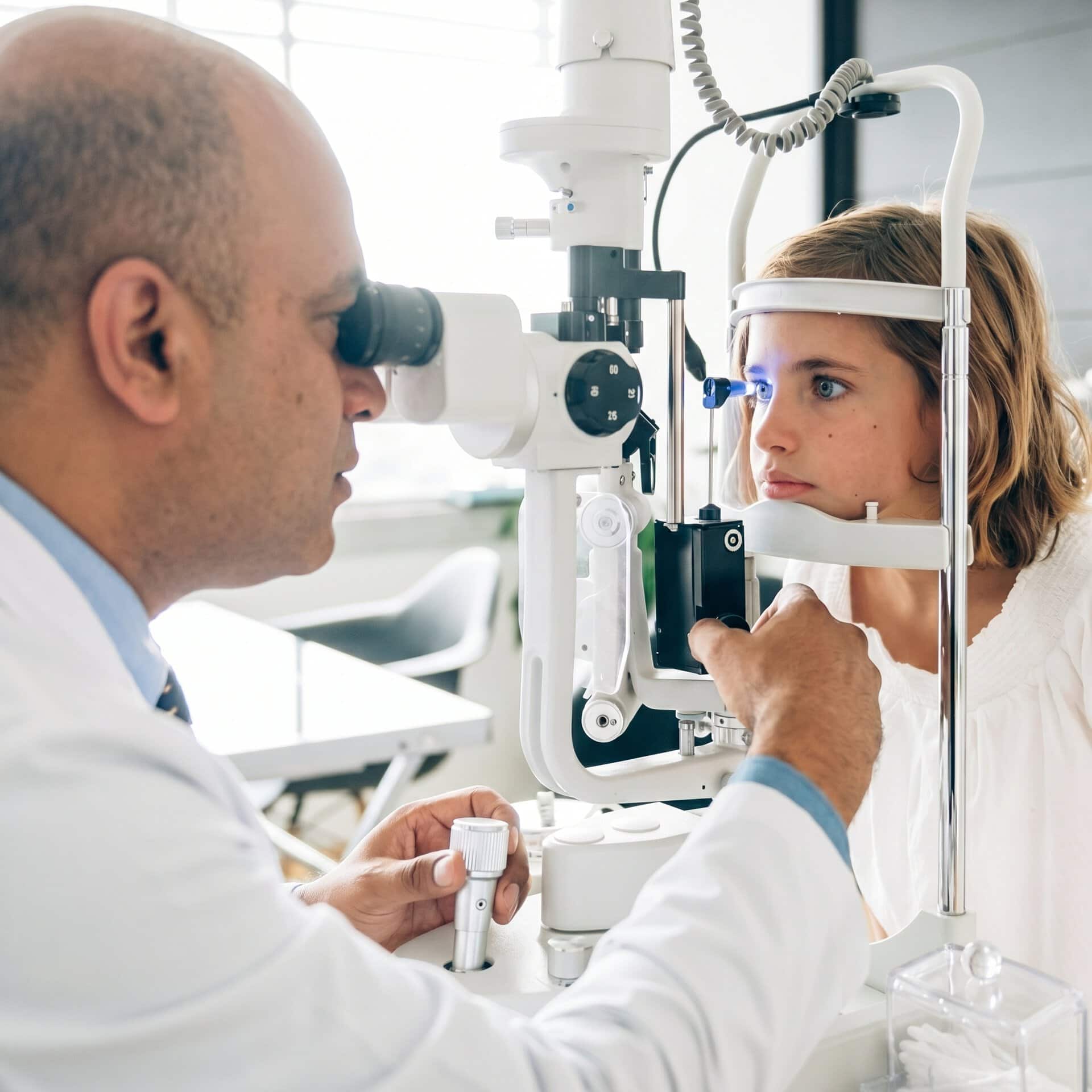
In brief: You should have regular eye exams even when you can see well. Some conditions, such as glaucoma and diabetes-related retinal damage, show no early signs. According to the American Academy of Ophthalmology (AAO), adults without eye problems should have a comprehensive exam every 5–10 years before age 40 and a baseline exam at age 40. After age 65, exams should be every 1–2 years. Children should have their eyes checked from birth. Diabetes, a family history of glaucoma or a strong glasses prescription call for more frequent checkups.
How often should you have an eye exam? Age-based schedule
| Who | How often, with no symptoms or increased risk |
|---|---|
| Children | at birth, 6–12 months, ages 1–3, ages 3–5, then as advised by the doctor |
| Adults under 40 | every 5–10 years |
| Age 40 | a baseline exam for eye diseases |
| Ages 40–54 | every 2–4 years |
| Age 55 and over | every 1–2 years |
| People with diabetes | every year; type 2 from diagnosis, type 1 within 5 years |
Source: AAO and the American Diabetes Association (ADA). If you have symptoms or an increased risk, your ophthalmologist will recommend more frequent checkups.
Why have an eye exam even when you can see well?
Many people see an ophthalmologist only when they have trouble seeing. But some of the most serious eye diseases progress without pain or any noticeable change in vision until significant damage has occurred:
- Glaucoma slowly damages the optic nerve and peripheral vision (see the clinic’s video on glaucoma);
- Diabetic retinopathy may cause no symptoms for years;
- Macular degeneration often starts in one eye, while the other eye compensates for it.
Regular eye exams can detect these changes early, when treatment is more likely to preserve your vision.
Children: when should the first eye exam take place?
The AAO recommends having a child’s eyes checked at several stages:
| Age | What is checked |
|---|---|
| At birth | the red reflex and basic signs of eye health |
| 6–12 months | eye movement and alignment, and visual fixation |
| 1–3 years | visual development, often using a special camera (photoscreening) |
| 3–5 years | visual acuity and eye alignment test |
| 5 years and older | visual acuity and eye alignment; thereafter, as advised by the doctor |
See an ophthalmologist without waiting for the next checkup if you notice that your child:
- turns one eye inward or outward (see strabismus in children);
- squints, rubs their eyes often, or tilts their head to see;
- sits very close to the TV or holds books very close;
- has a white pupil in flash photographs — this requires an urgent visit.
Adults under 40
If your eyes are healthy and your vision is good, the AAO recommends a comprehensive eye exam every 5–10 years. Contact lens wearers should have an exam every year, while people who wear glasses should follow the schedule recommended by their doctor. Infections, injuries, eye pain, or sudden flashes and floaters should not wait: seek care immediately.
After age 40
Around this age, most people start having difficulty reading up close—this is presbyopia (the “tired” eye for reading; see presbyopia correction). The AAO recommends a baseline eye disease screening at age 40, even without symptoms. After that, your ophthalmologist will decide how often you should return, usually every 2–4 years until age 54 and every 1–2 years from age 55 onward.
After age 65
The risk of cataracts, glaucoma, macular degeneration and retinal problems increases with age. The AAO recommends an eye exam every 1–2 years after age 65. If you notice blurred vision or glare from lights, it could be a cataract.
Diabetes, high blood pressure, and your eyes
- Diabetes damages the small blood vessels in the retina. For type 2 diabetes, an eye exam should be done as soon as diabetes is diagnosed; for type 1, within 5 years of diagnosis. After that, it is usually done every year, even when vision seems normal (ADA, 2026). Learn more about retinal diseases.
- High blood pressure increases the risk of retinal vein occlusion.
- A family history of glaucoma or high myopia (a strong glasses prescription) calls for more frequent checkups.

When should you see an ophthalmologist right away?
Don’t wait for your next checkup if you have:
- sudden vision loss in one or both eyes;
- flashes of light or many new floaters;
- a curtain-like shadow in your field of vision;
- severe eye pain with redness, especially with vomiting or halos around lights;
- a blow to the eye or chemicals in the eye (rinse the eye with plenty of clean water and come in immediately);
- sudden double vision.
What does an eye exam include?
A comprehensive eye exam with an ophthalmologist usually includes:
- a vision test using an eye chart and a glasses prescription check (refraction);
- measuring eye pressure;
- examining the front of the eye with a slit lamp;
- dilating the pupils with drops to examine the retina and optic nerve;
- when needed, additional tests such as OCT (a retinal scan) or a visual field test.
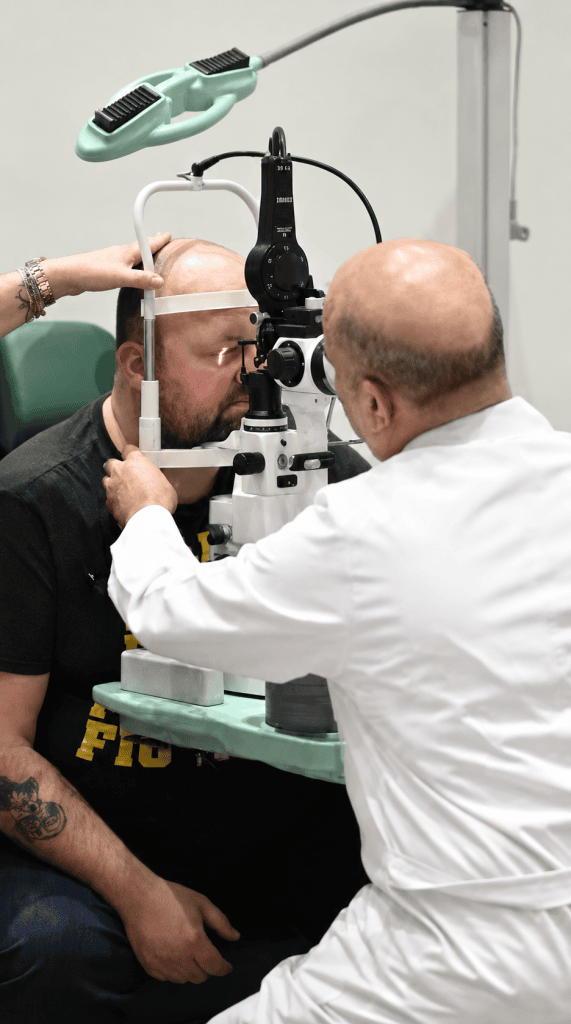
Dilating drops blur your vision for a few hours, so don’t drive after your appointment. Bring your glasses and a list of the medicines you take.
Is an optical shop eye test enough?
An optical shop test measures the prescription you need for your glasses. It does not check your eye health, including eye pressure, the retina, the optic nerve, or diseases that have no symptoms. For these, you need a comprehensive eye exam with an ophthalmologist.
Frequently asked questions
Does an eye exam hurt?
No. The drops may sting a little for a few seconds; the rest of the exam doesn’t hurt.
Do I need to come fasting or bring someone with me?
You don’t need to come fasting. If your pupils will be dilated, it’s a good idea to have someone available to drive you.
Sources
- American Academy of Ophthalmology — Eye Exam and Vision Testing Basics
- American Academy of Ophthalmology — Eye Screening for Children
- American Academy of Ophthalmology — Frequency of Ocular Examinations
- American Diabetes Association — Standards of Care in Diabetes 2026, Retinopathy
- National Eye Institute — Diabetic Retinopathy
Time for your next checkup? Book an eye exam at the Indian Eye Institute & Laser Center in Tirana. Book an appointment · Tel. +355 67 503 0017